巴菲特致股东的信(1998年)
⑦财产意外险的经营哲学


The Economics of Property-Casualty Insurance

         With the acquisition of General Re -- and with GEICO's business mushrooming -- it becomes more important than ever that you understand how to evaluate an insurance company. The key determinants are: (1) the amount of float that the business generates; (2) its cost; and (3) most important of all, the long-term outlook for both of these factors.

财产意外险的经营哲学

随着通用再保险的加入以及 GEICO 保险业务的突飞猛进,大家越来越有必要对如何评估保险业有更多的了解,其中主要的关键因素有(1)这个行业所能产生的浮存金规模(2)以及获得它的成本(3)最重要的是这两个因素的长期展望。

         To begin with, float is money we hold but don't own. In an insurance operation, float arises because premiums are received before losses are paid, an interval that sometimes extends over many years. During that time, the insurer invests the money. Typically, this pleasant activity carries with it a downside: The premiums that an insurer takes in usually do not cover the losses and expenses it eventually must pay. That leaves it running an "underwriting loss," which is the cost of float. An insurance business has value if its cost of float over time is less than the cost the company would otherwise incur to obtain funds. But the business is a lemon if its cost of float is higher than market rates for money.

首先浮存金是一项我们持有但却不属于我们的资金。在保险公司的营运中,浮存金产生的原因在于保险公司在真正支付损失理赔之前,一般会先向保户收取保费,在这期间保险公司会将资金运用在其它投资之上,当然这样的好处也必须要付出代价,通常保险业者收取的保费并不足以覆盖最后支付出去的相关损失与费用,于是保险公司便会发生承保损失,这就是浮存金的成本,而当一家公司取得浮存金成本,就长期而言低于从其它渠道取得资金的成本时,承保业务就有存在的价值,否则一旦保险业务取得浮存金的成本若远高于货币市场利率时,它就像是一颗极酸的柠檬。

         A caution is appropriate here: Because loss costs must be estimated, insurers have enormous latitude in figuring their underwriting results, and that makes it very difficult for investors to calculate a company's true cost of float. Errors of estimation, usually innocent but sometimes not, can be huge. The consequences of these miscalculations flow directly into earnings. An experienced observer can usually detect large-scale errors in reserving, but the general public can typically do no more than accept what's presented, and at times I have been amazed by the numbers that big-name auditors have implicitly blessed. As for Berkshire, Charlie and I attempt to be conservative in presenting its underwriting results to you, because we have found that virtually all surprises in insurance are unpleasant ones.

有一点必须特别注意的是,因为损失成本必须依赖估算,所以保险业者对于承保业绩有相当大调节的空间,连带使得投资人很难正确地衡量一家保险公司真正的浮存金成本,估计误差,通常是无心的,但有时却是故意,与真实的结果往往会有很大的差距,而这种结果直接反映在公司的损益表上,有经验的行家通常可以经由公司的准备提列情形发现重大的错误,但对于一般投资大众来说,除了被迫接受财务报表的数字之外,别无他法,而我个人常常被这些经过各大会计师事务所背书的财务报告所吓到,至于就伯克希尔本身而言,查理跟我在编列财务报表时,都尽量采取最保守的做法,因为我们发现,保险业所发生的意外,通常都不会是什么好消息。

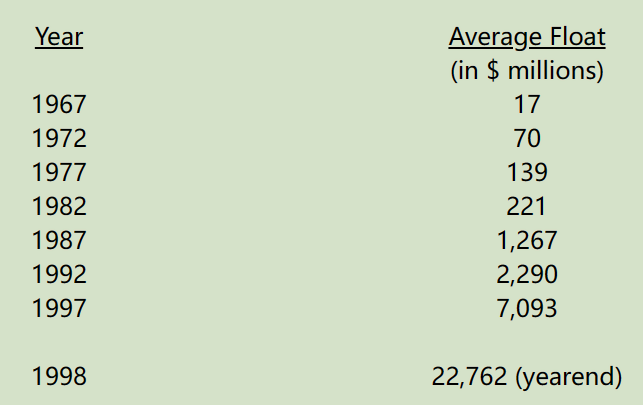
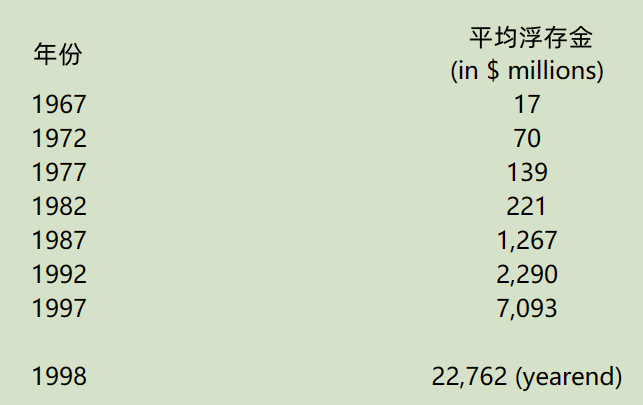
         The table that follows shows the float generated by Berkshire's insurance operations since we entered the business 32 years ago. The data are for every fifth year and also the last, which includes General Re's huge float. For the table we have calculated our float -- which we generate in large amounts relative to our premium volume -- by adding net loss reserves, loss adjustment reserves, funds held under reinsurance assumed and unearned premium reserves, and then subtracting agents balances, prepaid acquisition costs, prepaid taxes and deferred charges applicable to assumed reinsurance. (Got that?)

下表中所显示的数字是,伯克希尔进入保险业务 32 年以来所贡献的浮存金,其中 1998 年包含通用再保险的巨额浮存金在内。在这张计算浮存金的表中,我们将所有的损失准备金、损失费用调整准备金、再保险假设和未赚取保费加总后,再扣除应付佣金、预付并购成本、预付税负以及取得再保险业务的相关递延费用,得出浮存金的数额,弄清楚了吗?相对于我们的保费收入总额,我们的浮存金部位算是相当大的。

         Impressive as the growth in our float has been -- 25.4% compounded annually -- what really counts is the cost of this item. If that becomes too high, growth in float becomes a curse rather than a blessing.

平均浮存金规模年化 25.4%的成长确实令人印象深刻,不过真正重要的是取得浮存金的成本,如果成本过高,那么浮存金的成长就可能变成一项诅咒而非幸福。

         At Berkshire, the news is all good: Our average cost over the 32 years has been well under zero. In aggregate, we have posted a substantial underwriting profit, which means that we have been paid for holding a large and growing amount of money. This is the best of all worlds. Indeed, though our net float is recorded on our balance sheet as a liability, it has had more economic value to us than an equal amount of net worth would have had. As long as we can continue to achieve an underwriting profit, float will continue to outrank net worth in value.

在伯克希尔我们的记录算是不错的了,32 年来我们的平均成本远低于零,总的来说,我们享有相当多的承保收益,也就是说我们在持有一笔大额且不断成长的资金的同时,还能获得额外的收益,这是世界最佳。虽然就会计原则而言,浮存金在会计报表系属于负债,但实际上,这些负债对于伯克希尔而言,其价值远高于帐列的等量的股东权益,而只要我们在承保上能够持续维持盈利的话,这些浮存金的价值就远胜于帐上的账面价值。

         During the next few years, Berkshire's growth in float may well be modest. The reinsurance market is soft, and in this business, relationships change slowly. Therefore, General Re's float -- 2/3rds of our total -- is unlikely to increase significantly in the near term. We do expect, however, that our cost of float will remain very attractive compared to that of other insurers.

在往后的几年内,伯克希尔浮存金的成长速度可能会略微减缓,再保险的市场相对低迷,在这行商业竞争关系的变动相当缓慢,也因此占我们总浮存金将近 2/3 的通用再保险浮存金在可见的未来很难有重大的进展,不过我们仍然预期伯克希尔浮存金的成本相较于其它同业能够维持相当低的水准。

〔译文源于芒格书院整理的巴菲特致股东的信〕

© Copyright 2023 Meitiandudian. All Rights Reserved.