巴菲特致股东的信(2018年)⑤保险、“浮存金“与伯克希尔的融资


Insurance, “Float,” and the Funding of Berkshire

保险、"浮存金"与伯克希尔的融资

Our property/casualty (“P/C”) insurance business – our fifth grove – has been the engine propelling Berkshire’s growth since 1967, the year we acquired National Indemnity and its sister company, National Fire & Marine, for $8.6 million. Today, National Indemnity is the largest property/casualty company in the world as measured by net worth.

我们的财产意外险业务——第五片树林——自1967年以来一直是驱动伯克希尔增长的引擎。那一年,我们以860万美元收购了国民保险公司 (National Indemnity) 及其姊妹公司国民火灾与海事保险公司 (National Fire & Marine)。如今,以净资产衡量,国民保险公司是全球最大的财产意外险公司。

One reason we were attracted to the P/C business was the industry’s business model: P/C insurers receive premiums upfront and pay claims later. In extreme cases, such as claims arising from exposure to asbestos, or severe workplace accidents, payments can stretch over many decades.

我们被财产意外险业务吸引的原因之一是这个行业的商业模式:财产意外险公司先收保费,后付理赔。在极端情况下,比如石棉暴露引发的索赔或严重的工伤事故,赔付可以延续数十年。

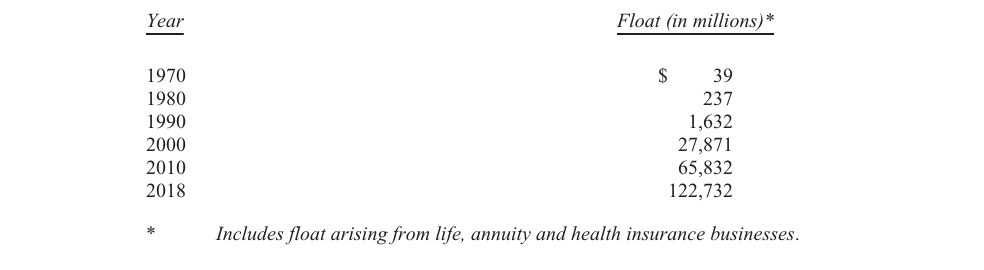
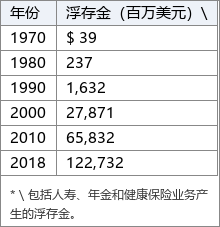
This collect-now, pay-later model leaves P/C companies holding large sums – money we call “float” – that will eventually go to others. Meanwhile, insurers get to invest this float for their own benefit. Though individual policies and claims come and go, the amount of float an insurer holds usually remains fairly stable in relation to premium volume. Consequently, as our business grows, so does our float. And how it has grown, as the following table shows:

这种先收钱、后付款的模式使得财产意外险公司持有大量资金——我们称之为"浮存金"——这些资金最终会流向他人。但在此期间,保险公司可以用这笔浮存金为自己投资。虽然个别保单和理赔来来去去,但一家保险公司持有的浮存金规模相对于保费规模通常相当稳定。因此,随着业务增长,我们的浮存金也跟着增长。而增长的情况,如下表所示:

We may in time experience a decline in float. If so, the decline will be very gradual – at the outside no more than 3% in any year. The nature of our insurance contracts is such that we can never be subject to immediate or near- term demands for sums that are of significance to our cash resources. That structure is by design and is a key component in the unequaled financial strength of our insurance companies. That strength will never be compromised.

随着时间推移,我们可能会经历浮存金的下降。如果真是如此,这种下降也将非常缓慢——任何一年最多不超过3%。我们保险合同的性质决定了,我们永远不会面临对我们现金资源有重大影响的即时或短期资金需求。这种结构是精心设计的,也是我们保险公司无与伦比的财务实力的关键组成部分。这种实力永远不会被削弱。

If our premiums exceed the total of our expenses and eventual losses, our insurance operation registers an underwriting profit that adds to the investment income the float produces. When such a profit is earned, we enjoy the use of free money – and, better yet, get paid for holding it.

如果我们的保费超过了费用和最终赔付的总和,我们的保险业务就会录得承保利润,这将增加浮存金所产生的投资收益。赚到这种利润时,我们就是在免费使用资金——更妙的是,因为持有这些资金我们反倒获得了收入。

Unfortunately, the wish of all insurers to achieve this happy result creates intense competition, so vigorous indeed that it sometimes causes the P/C industry as a whole to operate at a significant underwriting loss. That loss, in effect, is what the industry pays to hold its float. Competitive dynamics almost guarantee that the insurance industry, despite the float income all its companies enjoy, will continue its dismal record of earning subnormal returns on tangible net worth as compared to other American businesses.

不幸的是,所有保险公司都渴望实现这种美好结果,由此带来了激烈的竞争。竞争之激烈,有时会导致整个财产意外险行业出现重大承保亏损。这个亏损,实际上就是行业为持有浮存金而付出的代价。竞争格局几乎注定了保险行业——尽管旗下所有公司都享有浮存金收益——与其他美国企业相比,在有形净资产回报率上将继续保持令人沮丧的低水平纪录。

Nevertheless, I like our own prospects. Berkshire’s unrivaled financial strength allows us far more flexibility in investing our float than that generally available to P/C companies. The many alternatives available to us are always an advantage and occasionally offer major opportunities. When other insurers are constrained, our choices expand.

尽管如此,我还是看好我们自己的前景。伯克希尔无与伦比的财务实力使得我们在浮存金投资方面的灵活性远超一般财产意外险公司。我们可选择的众多投资方式始终是一种优势,偶尔还会带来重大机遇。当其他保险公司束手束脚时,我们的选择反而更多了。

Moreover, our P/C companies have an excellent underwriting record. Berkshire has now operated at an underwriting profit for 15 of the past 16 years, the exception being 2017, when our pre-tax loss was $3.2 billion. For the entire 16-year span, our pre-tax gain totaled $27 billion, of which $2 billion was recorded in 2018.

此外,我们的财产意外险业务有着出色的承保记录。在过去16年中,伯克希尔有15年实现了承保盈利,唯一的例外是2017年,当年我们的税前亏损为32亿美元。在整整16年中,我们的税前承保利润合计为270亿美元,其中20亿美元来自2018年。

That record is no accident: Disciplined risk evaluation is the daily focus of our insurance managers, who know that the benefits of float can be drowned by poor underwriting results. All insurers give that message lip service. At Berkshire it is a religion, Old Testament style.

这一记录并非偶然:严格的风险评估是我们保险经理们每天聚焦的重点,他们深知浮存金的好处可能被糟糕的承保结果淹没。所有保险公司嘴上都这么说。但在伯克希尔,这是一种信仰——旧约风格的那种。


In most cases, the funding of a business comes from two sources – debt and equity. At Berkshire, we have two additional arrows in the quiver to talk about, but let’s first address the conventional components.

在大多数情况下,企业的资金来源有两个——债务和股权。在伯克希尔,我们还有两支额外的箭在弓袋里,不过让我们先谈谈常规的部分。

We use debt sparingly. Many managers, it should be noted, will disagree with this policy, arguing that significant debt juices the returns for equity owners. And these more venturesome CEOs will be right most of the time.

我们很少举债。需要指出的是,许多管理者会不同意这一政策,他们认为大量举债可以提升股东回报。而且这些更敢冒险的CEO在大多数时候是对的。

At rare and unpredictable intervals, however, credit vanishes and debt becomes financially fatal. A Russian- roulette equation – usually win, occasionally die – may make financial sense for someone who gets a piece of a company’s upside but does not share in its downside. But that strategy would be madness for Berkshire. Rational people don’t risk what they have and need for what they don’t have and don’t need.

然而,在罕见且不可预测的时刻,信贷会消失,债务会变成致命的。一个俄罗斯轮盘赌式的等式——通常会赢,偶尔会死——对于那些只分享公司上涨好处而不承担下跌风险的人来说,或许在财务上说得通。但这种策略对伯克希尔来说就是疯狂。理性的人不会拿自己已经拥有和需要的东西,去冒险换取自己没有也不需要的东西。

Most of the debt you see on our consolidated balance sheet – see page K-65 – resides at our railroad and energy subsidiaries, both of them asset-heavy companies. During recessions, the cash generation of these businesses remains bountiful. The debt they use is both appropriate for their operations and not guaranteed by Berkshire.

你在我们合并资产负债表上看到的大部分债务——见K-65页——都在我们的铁路和能源子公司,两者都是重资产企业。在经济衰退期间,这些企业的现金流依然充沛。它们使用的债务既适合各自的运营,也不受伯克希尔的担保。

Our level of equity capital is a different story: Berkshire’s $349 billion is unmatched in corporate America. By retaining all earnings for a very long time, and allowing compound interest to work its magic, we have amassed funds that have enabled us to purchase and develop the valuable groves earlier described. Had we instead followed a 100% payout policy, we would still be working with the $22 million with which we began fiscal 1965.

我们的权益资本就是另一回事了:伯克希尔的3490亿美元在美国企业界无人能及。通过长期保留所有收益,并让复利发挥它的魔力,我们积累了资金,使我们得以购买和发展前面描述的那些宝贵资产。如果我们当初选择100%分红的政策,我们手头就只有1965财年开始时的那2200万美元了。

Beyond using debt and equity, Berkshire has benefitted in a major way from two less-common sources of corporate funding. The larger is the float I have described. So far, those funds, though they are recorded as a huge net liability on our balance sheet, have been of more utility to us than an equivalent amount of equity. That’s because they have usually been accompanied by underwriting earnings. In effect, we have been paid in most years for holding and using other people’s money.

除了债务和股权之外,伯克希尔还从两种不太常见的企业资金来源中大获裨益。较大的一个就是我描述过的浮存金。到目前为止,尽管这笔资金在我们的资产负债表上被记录为巨额净负债,但它对我们的效用超过了等额的股权。原因在于,浮存金通常伴随着承保利润。实际上,在大多数年份里,我们是因为持有和使用别人的钱而获得报酬的。

As I have often done before, I will emphasize that this happy outcome is far from a sure thing: Mistakes in assessing insurance risks can be huge and can take many years to surface. (Think asbestos.) A major catastrophe that will dwarf hurricanes Katrina and Michael will occur – perhaps tomorrow, perhaps many decades from now. “The Big One” may come from a traditional source, such as a hurricane or earthquake, or it may be a total surprise involving, say, a cyber attack having disastrous consequences beyond anything insurers now contemplate. When such a mega- catastrophe strikes, we will get our share of the losses and they will be big – very big. Unlike many other insurers, however, we will be looking to add business the next day.

正如我以前多次强调的,这种美好的结果远非板上钉钉:评估保险风险的错误可能是巨大的,而且可能需要多年才能浮出水面。(想想石棉。)一场让卡特里娜飓风 (Katrina) 和迈克尔飓风 (Michael) 都黯然失色的巨灾必将发生——也许是明天,也许是几十年后。"大事件"可能来自传统渠道,如飓风或地震,也可能是完全出乎意料的,比如一场网络攻击,其灾难性后果超出了保险公司目前的任何想象。当这样一场超级灾难降临时,我们分担的损失将是巨大的——非常巨大。然而,与许多其他保险公司不同的是,我们会寻求在第二天就增加业务。

The final funding source – which again Berkshire possesses to an unusual degree – is deferred income taxes. These are liabilities that we will eventually pay but that are meanwhile interest-free.

最后一个资金来源——伯克希尔在这方面同样拥有非同寻常的规模——是递延所得税。这些是我们最终要支付的负债,但在此期间它们是无息的。

As I indicated earlier, about $14.7 billion of our $50.5 billion of deferred taxes arises from the unrealized gains in our equity holdings. These liabilities are accrued in our financial statements at the current 21% corporate tax rate but will be paid at the rates prevailing when our investments are sold. Between now and then, we in effect have an interest-free “loan” that allows us to have more money working for us in equities than would otherwise be the case.

如前所述,在我们505亿美元的递延税款中,约有147亿美元来自我们所持股票的未实现资本利得。这些负债在我们的财务报表中按当前21%的企业税率计提,但将按照我们出售投资时的届时税率支付。从现在到那时,我们实际上有了一笔无息"贷款",使我们在股票投资上能动用比正常情况更多的资金。

A further $28.3 billion of deferred tax results from our being able to accelerate the depreciation of assets such as plant and equipment in calculating the tax we must currently pay. The front-ended savings in taxes that we record gradually reverse in future years. We regularly purchase additional assets, however. As long as the present tax law prevails, this source of funding should trend upward.

另外283亿美元的递延税款,源于我们在计算当期应缴税款时能够加速折旧厂房和设备等资产。我们记录的前期税收节省将在未来几年逐步回转。不过,我们会持续购买新的资产。只要现行税法不变,这个资金来源应该会呈上升趋势。

Over time, Berkshire’s funding base – that’s the right-hand side of our balance sheet – should grow, primarily through the earnings we retain. Our job is to put the money retained to good use on the left-hand side, by adding attractive assets.

长期来看,伯克希尔的融资基础——也就是我们资产负债表的右边——应该会增长,主要来自我们的留存收益。我们的任务是把留存下来的资金好好用在左边,买入有吸引力的资产。

〔译文源于芒格书院整理的巴菲特致股东的信〕

© Copyright 2023 Meitiandudian. All Rights Reserved.