巴菲特致股东的信(1996年)
④保险业务:概述


Insurance Operations - Overview

     Our insurance business was terrific in 1996. In both primary insurance, where GEICO is our main unit, and in our "super-cat" reinsurance business, results were outstanding.

保险业务:概述

在 1996 年,我们保险业务的营运大放异彩,不管是以 GEICO 车险为主的直保业务,还是巨灾再保险业务的表现都很杰出。

     As we've explained in past reports, what counts in our insurance business is, first, the amount of "float" we generate and, second, its cost to us. These are matters that are important for you to understand because float is a major component of Berkshire's intrinsic value that is not reflected in book value.

就像是在过去年报中一再跟各位解释的,对于我们的保险业务来说,真正重要的,第一是我们取得的保险浮存金规模,第二就是取得它的成本,这两点相当的重要,大家必须了解浮存金虽然不会反应在公司账面价值之上,但却是伯克希尔内在价值构成的关键因素之一。

     To begin with, float is money we hold but don't own. In an insurance operation, float arises because premiums are received before losses are paid. Secondly, the premiums that an insurer takes in typically do not cover the losses and expenses it eventually must pay. That leaves it running an "underwriting loss," which is the cost of float. An insurance business has value if its cost of float over time is less than the cost the company would otherwise incur to obtain funds. But the business is an albatross if the cost of its float is higher than market rates for money.

更进一步说,浮存金是一项我们持有但不属于我们的资金,在保险公司的营运中,浮存金的产生原因在于保险公司在真正支付损失理赔之前,一般会先向保户收取保费,而通常保险业者收取的保费不足以覆盖最终要支付的相关损失与费用,于是保险公司便会发生承保损失,这就是浮存金的成本,而当浮存金成本长期而言低于从其它渠道取得资金的成本时,保险公司就有存在的价值,不过保险业务取得浮存金的成本若远高于货币市场利率,它就像是一只在陆地上笨重的信天翁。

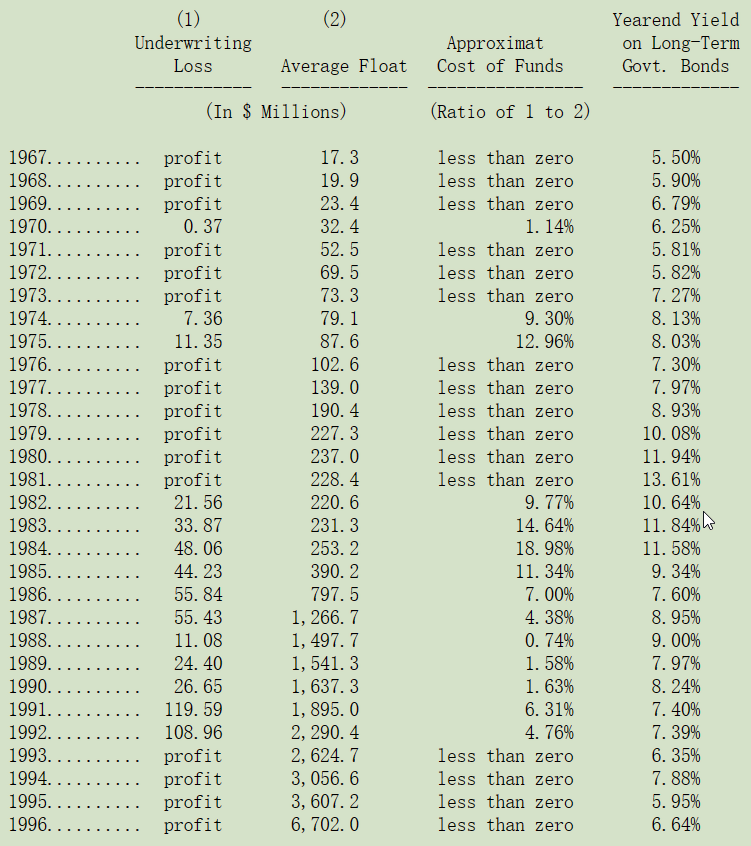
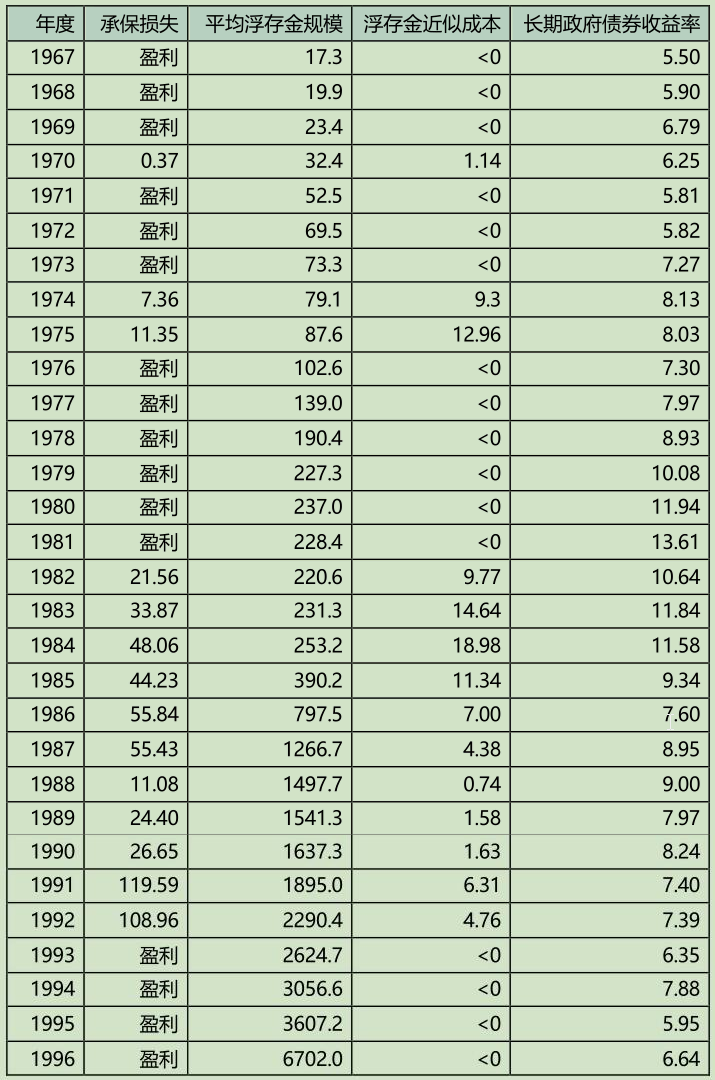
     As the numbers in the following table show, Berkshire's insurance business has been a huge winner. For the table, we have calculated our float - which we generate in large amounts relative to our premium volume - by adding loss reserves, loss adjustment reserves, funds held under reinsurance assumed and unearned premium reserves, and then subtracting agents' balances, prepaid acquisition costs, prepaid taxes and deferred charges applicable to assumed reinsurance. Our cost of float is determined by our underwriting loss or profit. In those years when we have had an underwriting profit, such as the last four, our cost of float has been negative. In effect, we have been paid for holding money.

不过如同下表中的数字所显示的,伯克希尔的保险业务可说是大获全胜,表中的浮存金,系将所有的损失准备、损失费用调整准备、假设再保险持有的资金与未赚取保费加总后,再扣除应付佣金、预付并购成本、预付税款及相关再保递延费用。相对于我们的保费收入总额,我们的浮存金部位算是相当大的,至于浮存金的成本则取决于实际发生的承保损失或收益而定,在某些年度,就像是最近四年,由于我们连续承保盈利,所以换句话说,我们的资金成本甚至是负的,实际上,我们因持有这些资金而获得回报。

     Since 1967, when we entered the insurance business, our float has grown at an annual compounded rate of 22.3%. In more years than not, our cost of funds has been less than nothing. This access to "free" money has boosted Berkshire's performance in a major way. Moreover, our acquisition of GEICO materially increases the probability that we can continue to obtain "free" funds in increasing amounts.

自从 1967 年我们进军保险业以来,我们的浮存金规模每年以 22.3%复合增长率增加,大部分的年度,我们的资金成本都在零以下,受惠于这些免费的资金,伯克希尔的绩效大大的提升了。此外,在完成对 GEICO 的并购之后,我们取得免费资金的能力又增加了许多。

〔译文源于芒格书院整理的巴菲特致股东的信〕

© Copyright 2023 Meitiandudian. All Rights Reserved.