巴菲特致股东的信(2003年)⑫股票投资


Investments

股票投资

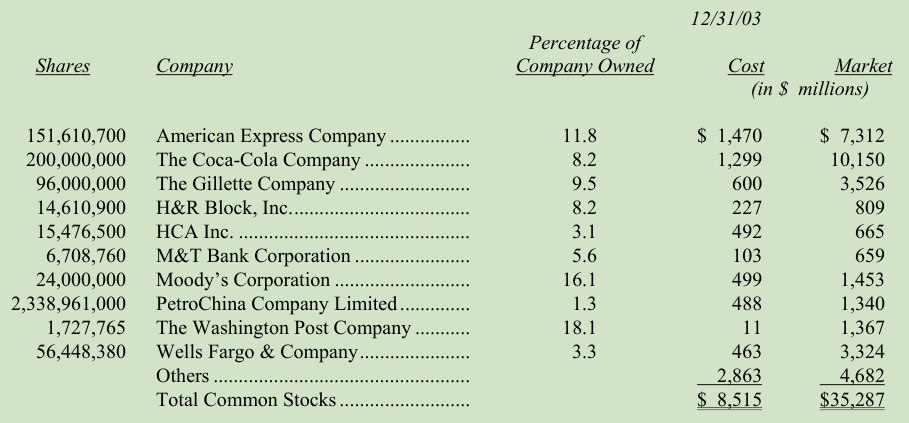
The table that follows shows our common stock investments. Those that had a market value of more than $500 million at the end of 2003 are itemized.

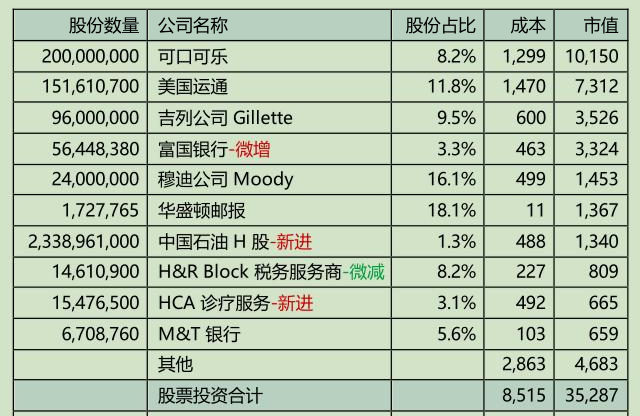
下表是伯克希尔 2003 年市价超过 5 亿美元以上的股票投资

We bought some Wells Fargo shares last year. Otherwise, among our six largest holdings, we last changed our position in Coca-Cola in 1994, American Express in 1998, Gillette in 1989, Washington Post in 1973, and Moody’s in 2000. Brokers don’t love us.

去年我们增加了一些富国银行的股票,除此之外,在我们六大持股当中,可口可乐最后一次调整持股的时间是 1994 年、美国运通是 1998 年、吉列是 1989 年、华盛顿邮报是 1973 年,而穆迪信用是 2000 年,股票交易员实在拿我们没有办法。

We are neither enthusiastic nor negative about the portfolio we hold. We own pieces of excellent businesses – all of which had good gains in intrinsic value last year – but their current prices reflect their excellence. The unpleasant corollary to this conclusion is that I made a big mistake in not selling several of our larger holdings during The Great Bubble. If these stocks are fully priced now, you may wonder what I was thinking four years ago when their intrinsic value was lower and their prices far higher. So do I.

对于目前手头持有的这些投资组合,我们既不觉到特别兴奋,也没有负面看法,我们拥有的是一些优质企业的部分所有权,虽然去年这些企业的内在价值都有着长足的进步,可是同样的它们杰出的表现也反应在其股价之上。当然这个结论从另一个角度的推论是,在股市大泡沫期间没有卖出这些较大仓位的持股,是我犯的一个重大的错误。换句话说,如果这些股票现在的定价已经充分反应其价值的话,你可能会想知道四年前,当它们的价格远超其内在价值的时候,我在想些什么。我也觉得很奇怪。

In 2002, junk bonds became very cheap, and we purchased about $8 billion of these. The pendulum swung quickly though, and this sector now looks decidedly unattractive to us. Yesterday’s weeds are today being priced as flowers.

回顾 2002 年,当时的垃圾债券价格相当便宜,所以我们一口气买了 80 亿美元,只是钟摆显然摆荡的很快,目前这方面的投资标的,很显然地对我们已没有任何吸引力,昔日的野草如今被人捧为鲜花。

We’ve repeatedly emphasized that realized gains at Berkshire are meaningless for analytical purposes. We have a huge amount of unrealized gains on our books, and our thinking about when, and if, to cash them depends not at all on a desire to report earnings at one specific time or another. Nevertheless, to see the diversity of our investment activities, you may be interested in the following table, categorizing the gains we reported during 2003:

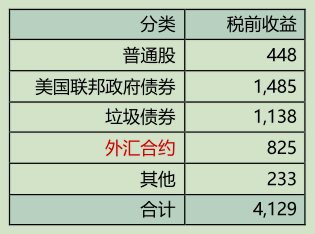
个人一再重申已实现的资本利得,对于分析伯克希尔来说,一点用处都没有,我们帐上拥有大量的未实现资本利得,何时该实现,其考量点完全与某些特定日期的财务报表完全没有关连,但有鉴于伯克希尔的投资活动日益多元化,大家或许对于以下表列 2003 年的数字会感到有兴趣。
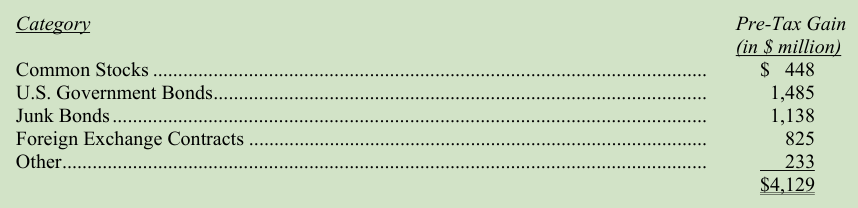
The common stock profits occurred around the edges of our portfolio – not, as we already mentioned, from our selling down our major positions. The profits in governments arose from our liquidation of long-term strips (the most volatile of government securities) and from certain strategies I follow within our finance and financial products division. We retained most of our junk portfolio, selling only a few issues. Calls and maturing bonds accounted for the rest of the gains in the junk category.

普通股的收益主要来自于处分其它一些次要的持股,而非先前提到的那些主要持股,至于政府债券的收益主要是出售长期债票(这是政府公债中价格变动最剧烈的品种)以及财务与金融商品部门投资策略上的调整,我们保留大部分的垃圾债券,只出售了其中一少部分,另外垃圾债券的收益还包含了一些到期或是提前赎回的债券。

During 2002 we entered the foreign currency market for the first time in my life, and in 2003 we enlarged our position, as I became increasingly bearish on the dollar. I should note that the cemetery for seers has a huge section set aside for macro forecasters. We have in fact made few macro forecasts at Berkshire, and we have seldom seen others make them with sustained success.

2002 年我们投资生涯首度进入外汇市场,2003 年我们进一步扩大这方面的部位,主要原因在于个人长期看空美元,我必须强调的是,预言家的墓地有一大半都躺着宏观经济学家,在伯克希尔我们很少对于宏观经济做出预测,我们也很少看到有人可以长期做出准确的预测。

We have – and will continue to have – the bulk of Berkshire’s net worth in U.S. assets. But in recent years our country’s trade deficit has been force-feeding huge amounts of claims on, and ownership in, America to the rest of the world. For a time, foreign appetite for these assets readily absorbed the supply. Late in 2002, however, the world started choking on this diet, and the dollar’s value began to slide against major currencies. Even so, prevailing exchange rates will not lead to a material letup in our trade deficit. So whether foreign investors like it or not, they will continue to be flooded with dollars. The consequences of this are anybody’s guess. They could, however, be troublesome – and reach, in fact, well beyond currency markets.

展望未来,我们仍然会将伯克希尔大部分的投资摆在美国资产之上,然而近年来,我们国家的贸易赤字持续强迫全世界其它国家吸收美国的债权与资产,曾经一度,外国对于这类资产的兴趣消化了这类供给,但是到了2002 年,全世界开始吃撑到吐,使得美元相对于其它货币开始贬值,然而汇率的变动却无法有效地解决贸易的赤字,所以不管外国投资人愿意与否,他们手上仍将抱满美元,其结果大家很容易想象,最后还是会对外汇市场造成困扰。

As an American, I hope there is a benign ending to this problem. I myself suggested one possible solution – which, incidentally, leaves Charlie cold – in a November 10, 2003 article in Fortune Magazine. Then again, perhaps the alarms I have raised will prove needless: Our country’s dynamism and resiliency have repeatedly made fools of naysayers. But Berkshire holds many billions of cash-equivalents denominated in dollars. So I feel more comfortable owning foreign-exchange contracts that are at least a partial offset to that position.

身为一位美国人,我衷心希望这个问题能够得到圆满的解决,我个人就曾提出一个解决之道,这篇文章业已刊登在 2003 年 11 月 10 日财富杂志之上,然而再一次的,或许我提出的警讯事后很可能证实无效,我们国家的活力以及耐力一再让唱衰者像个傻瓜,不过伯克希尔手握数百亿美元的美元,这也是为何我会想到如果有一些外汇契约可以抵消部分的部位会感到比较安心。

These contracts are subject to accounting rules that require changes in their value to be contemporaneously included in capital gains or losses, even though the contracts have not been closed. We show these changes each quarter in the Finance and Financial Products segment of our earnings statement. At yearend, our open foreign exchange contracts totaled about $12 billion at market values and were spread among five currencies. Also, when we were purchasing junk bonds in 2002, we tried when possible to buy issues denominated in Euros. Today, we own about $1 billion of these.

依照会计原则,这些契约的价值若有任何变动都必须立即反应在损益表之上,即便这些契约尚未到期也一样,我们把这部分的损益归类到财务与金融商品部门,截至年底,我们签订的外汇契约总额累计达到 120 亿美元,分布在五种外国货币,此外当我们在 2002 年买入垃圾债券时,我们也尽量买进一些以欧元计价的债券,目前这部分投资的金额约有 10 亿美元左右。

When we can’t find anything exciting in which to invest, our “default” position is U.S. Treasuries, both bills and repos. No matter how low the yields on these instruments go, we never “reach” for a little more income by dropping our credit standards or by extending maturities. Charlie and I detest taking even small risks unless we feel we are being adequately compensated for doing so. About as far as we will go down that path is to occasionally eat cottage cheese a day after the expiration date on the carton.

当我们找不到什么可以投资时,我们所设定投资选择就是美国债券,包含国库券以及附买回债在内券,不管这些投资的回报率有多低,我们从来不会因为想要获得更多利益就降低我们的信用评估标准或延长到期日,除非得到合理的回报,否则查理跟我痛恨接受任何些微的风险,到目前为止,我们勉强可以接受的最大风险限度就是:吃标示过期一天的乳酪。

* * * * * * * * * * * *

* * * * * * * * * * * *

A 2003 book that investors can learn much from is Bull! by Maggie Mahar. Two other books I’d recommend are The Smartest Guys in the Room by Bethany McLean and Peter Elkind, and In an Uncertain World by Bob Rubin. All three are well-reported and well-written. Additionally, Jason Zweig last year did a first-class job in revising The Intelligent Investor, my favorite book on investing.

2003 年投资人可以好好读的好书,包含 MaggieMahar 的《大牛市:涨升与崩盘 1982-2004》(Bull!AHistory of the Boom and Bust, 1982-2004),另外两本推荐好书是 BethanyMcLean 及 PeterElkind 合著的《房间里最精明的人:安然破产案始末》(The Smartest Guys in the Room)以及 BobRubin《在不确定的世界:从华尔街到华盛顿的艰难选择》(In an Uncertain World),这三本书都写得相当详实,文笔也颇佳,此外JasonZweig 去年重编了《聪明的投资者》注疏版,这是我个人最钟爱的投资工具书。

〔译文源于芒格书院整理的巴菲特致股东的信〕

© Copyright 2023 Meitiandudian. All Rights Reserved.