巴菲特致股东的信(2009年)⑧投资业务


Investments

投资业务

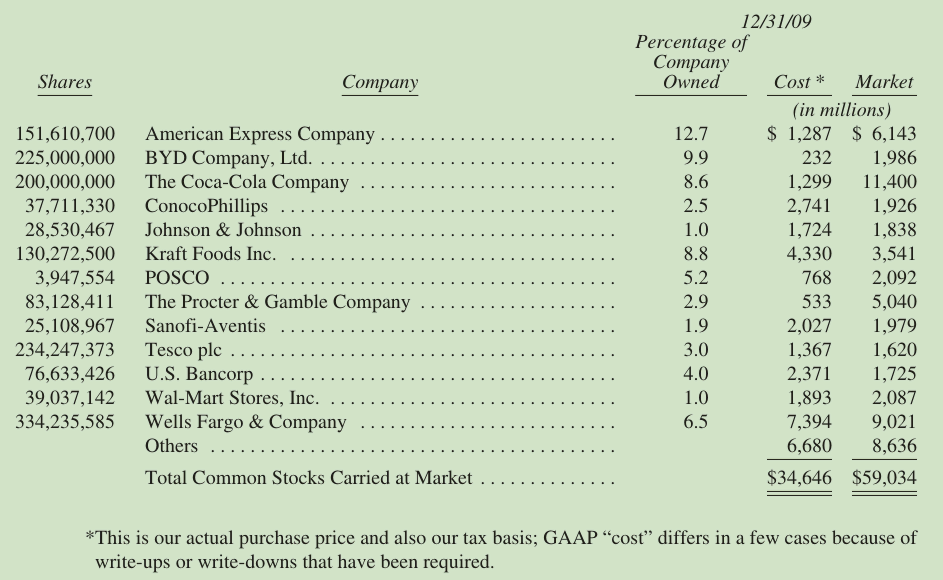
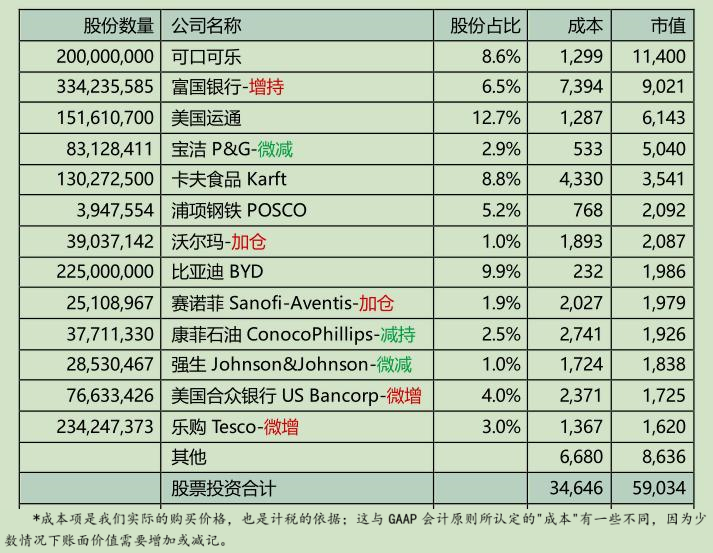
Below we show our common stock investments that at yearend had a market value of more than $1 billion.

下表是我们年末市场价值超过 10 亿美元的普通股投资:

In addition, we own positions in non-traded securities of Dow Chemical, General Electric, Goldman Sachs, Swiss Re and Wrigley with an aggregate cost of $21.1 billion and a carrying value of $26.0 billion. We purchased these five positions in the last 18 months. Setting aside the significant equity potential they provide us, these holdings deliver us an aggregate of $2.1 billion annually in dividends and interest. Finally, we owned 76,777,029 shares (22.5%) of BNSF at yearend, which we then carried at $85.78 per share, but which have subsequently been melded into our purchase of the entire company.

此外,我们持有陶氏化学(30 亿)、通用电气(30 亿)、高盛(50 亿)、瑞士再保险(30 亿瑞士法郎约 26 亿美元)和箭牌(65 亿)的不可交易债券,总成本是 211 亿美元,账面现行价值是 260 亿美元。我们在过去 18 个月建立了这 5 个仓位。除了它们给我们提供的巨大的股权资产潜力之外,这些持股还给我们带来了每年总计 21 亿美元的股息和利息。最后,我们在年末拥有 76,777,029 股 BNSF 铁路股份(占比 22.5%),每股平均成本 85.78 美元,但是随后并入了我们对整个公司的收购。

In 2009, our largest sales were in ConocoPhillips, Moody’s, Procter & Gamble and Johnson & Johnson (sales of the latter occurring after we had built our position earlier in the year). Charlie and I believe that all of these stocks will likely trade higher in the future. We made some sales early in 2009 to raise cash for our Dow and Swiss Re purchases and late in the year made other sales in anticipation of our BNSF purchase.

2009 年,我们最大的卖出是康菲石油,穆迪、宝洁,以及强生(后者的卖出在我们今年早期持仓后发生)。我和查理相信所有这些股票在将来都很可能涨得更高。我们在 2009 年初卖出了一些,为陶氏化学和瑞士再保险的收购筹集资金,然后年底卖出一些来准备 BNSF 的收购。

We told you last year that very unusual conditions then existed in the corporate and municipal bond markets and that these securities were ridiculously cheap relative to U.S. Treasuries. We backed this view with some purchases, but I should have done far more. Big opportunities come infrequently. When it’s raining gold, reach for a bucket, not a thimble.

我们去年曾告诉你,当时公司和市政债券市场存在非常罕见的情况,这些债券相比于美国国债的价格低得离谱,我们通过几项购买支持了这个观点,但是我应该买的更多。这样大的机会非常罕见,当天上掉金子的时候,应该拿桶去接,而不是管子。

We entered 2008 with $44.3 billion of cash-equivalents, and we have since retained operating earnings of $17 billion. Nevertheless, at yearend 2009, our cash was down to $30.6 billion (with $8 billion earmarked for the BNSF acquisition). We’ve put a lot of money to work during the chaos of the last two years. It’s been an ideal period for investors: A climate of fear is their best friend. Those who invest only when commentators are upbeat end up paying a heavy price for meaningless reassurance. In the end, what counts in investing is what you pay for a business – through the purchase of a small piece of it in the stock market – and what that business earns in the succeeding decade or two.

2008 年初,我们拥有 443 亿美元的类现金资产,之后我们保留了 170 美元的经营收益。然而,在 2009 年底,我们的现金减少到了 306 亿美元(其中 80 亿用于收购 BNSF),我们在过去两年的混乱中投入了大量资金。那是一个理想的投资时期:恐慌的氛围的投资者的朋友。那些只在股评家乐观时投资的投资者,最终为了毫无意义的保证付出了极高的价格。最后,在投资中最重要的在于,你通过股票市场购买一家企业一小部分股权所支付的价格,以及该企业在随后的十年或二十年所赚取的利润。

************

************

Last year I wrote extensively about our derivatives contracts, which were then the subject of both controversy and misunderstanding. For that discussion, please go to www.berkshirehathaway.com.

去年我大篇幅的详细的介绍了我们的衍生品合约,这引起了争议和误解。有关讨论请登陆伯克希尔网站查看。

We have since changed only a few of our positions. Some credit contracts have run off. The terms of about 10% of our equity put contracts have also changed: Maturities have been shortened and strike prices materially reduced. In these modifications, no money changed hands.

之后我们改变了一些仓位。一些信用合约已经到期失效。我们约 10%的股票指数看跌合约的条款发生了改变:到期日缩短,行权价降低。但这些改变并没有金钱易手。

A few points from last year’s discussion are worth repeating:

去年中讨论的几点现在需要重申一下:

(1)Though it’s no sure thing, I expect our contracts in aggregate to deliver us a profit over their lifetime, even when investment income on the huge amount of float they provide us is excluded in the calculation. Our derivatives float – which is not included in the $62 billion of insurance float I described earlier – was about $6.3 billion at yearend.

(1)尽管不能确保,但我认为我们的合约最终将给我们带来利润,即使在计算中不包括浮存金的投资收益。我们的衍生品浮存金在年末约为 63 亿美元,这并不包括在之前提到的 620 亿美元保险浮存金中。

(2)Only a handful of our contracts require us to post collateral under any circumstances. At last year’s low point in the stock and credit markets, our posting requirement was $1.7 billion, a small fraction of the derivatives-related float we held. When we do post collateral, let me add, the securities we put up continue to earn money for our account.

(2)只有少数合约要求我们无论如何都要提交抵押品。去年,股市和信贷市场的最低位,我们发行的衍生品合约规模是 17 亿美元,只占我们衍生品相关浮存金的一小部分。让我补充一点,当我们提供抵押品时,我们所提供的证券仍然在给我们赚钱。

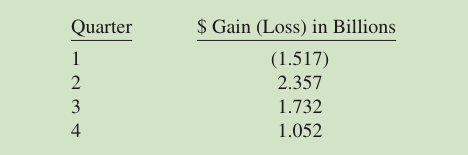
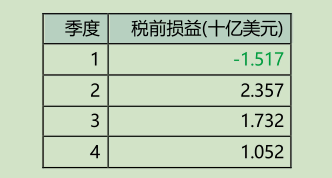
(3)Finally, you should expect large swings in the carrying value of these contracts, items that can affect our reported quarterly earnings in a huge way but that do not affect our cash or investment holdings. That thought certainly fit 2009’s circumstances. Here are the pre-tax quarterly gains and losses from derivatives valuations that were part of our reported earnings last year:

(3)最后,这些合约的帐面价值会出现有大波动,这会很大程度上影响我们的季度报告盈利,但是不会影响我们的现金或投资持有。这个想法很适合 2009 年的环境。以下是衍生品估值的税前季度损益,这是我们去年报告收益的一部分:
As we’ve explained, these wild swings neither cheer nor bother Charlie and me. When we report to you, we will continue to separate out these figures (as we do realized investment gains and losses) so that you can more clearly view the earnings of our operating businesses. We are delighted that we hold the derivatives contracts that we do. To date we have significantly profited from the float they provide. We expect also to earn further investment income over the life of our contracts.

正如我们解释的那样,这些剧烈波动不会使我和查理高兴或者烦恼。当我们报告给你的时候,我们仍将这些数字分开(就像我们确实实现了收益或损失一样),这样你就可以更清楚地看到我们所经营业务的盈利情况。我们很高兴我们持有这些衍生品合约。至今我们已经从它们所提供的浮存金中获利颇丰。我们希望在这些合同有效期内赚取更多的投资收益。

We have long invested in derivatives contracts that Charlie and I think are mispriced, just as we try to invest in mispriced stocks and bonds. Indeed, we first reported to you that we held such contracts in early 1998. The dangers that derivatives pose for both participants and society – dangers of which we’ve long warned, and that can be dynamite – arise when these contracts lead to leverage and/or counterparty risk that is extreme. At Berkshire nothing like that has occurred – nor will it.

我们长期投资于我和查理认为定价错误的衍生品合约,就像我们试图投资定价错误的股票和债券一样。事实上,我们在 1998 年第一次向你报告我们持有此类合约(白银)。我们早就警告过衍生品给社会和相关参与者带来的危险,这可能是毁灭性的,当这些合约导致极端的杠杆或交易对手风险时就会出现。在伯克希尔,这类事情从来没有发生过,将来也不会发生。

It’s my job to keep Berkshire far away from such problems. Charlie and I believe that a CEO must not delegate risk control. It’s simply too important. At Berkshire, I both initiate and monitor every derivatives contract on our books, with the exception of operations-related contracts at a few of our subsidiaries, such as MidAmerican, and the minor runoff contracts at General Re. If Berkshire ever gets in trouble, it will be my fault. It will not be because of misjudgments made by a Risk Committee or Chief Risk Officer.

让伯克希尔远离这些风险是我的职责所在。查理和我都认为 CEO 不能把风险控制权交给别人。这太重要了。在伯克希尔,我发起并监控每一份衍生品合约,除了少数几家的子公司(中美能源)的相关运营合同,以及通用再保险剩余的少数收尾合约。如果伯克希尔遇到麻烦,那就是我的错,决不会是风险委员会或首席风险官的责任。

************

************

In my view a board of directors of a huge financial institution is derelict if it does not insist that its CEO bear full responsibility for risk control. If he’s incapable of handling that job, he should look for other employment. And if he fails at it – with the government thereupon required to step in with funds or guarantees – the financial consequences for him and his board should be severe.

在我看来,一家大型金融机构的董事会如果不坚持要求 CEO 承担全部风险控制责任,那么他们就是失职。如果 CEO 不能胜任这项任务,那么他应该另谋高就。如果他无法做到,而政府需要投入资金的话,CEO 和董事会应该承担很大责任。

It has not been shareholders who have botched the operations of some of our country’s largest financial institutions. Yet they have borne the burden, with 90% or more of the value of their holdings wiped out in most cases of failure. Collectively, they have lost more than $500 billion in just the four largest financial fiascos of the last two years. To say these owners have been “bailed-out” is to make a mockery of the term.

搞砸了全国一些最大金融机构运营的不是股东,但却是股东承担了这一负担,在大多数失败案例中,他们持有的股票价值 90%或更多都被抹去了。在过去的两年中的四次最大的金融破产中,他们总计损失了超过 5000 亿美元。如果说这些股东得到了"救助",那么简直都是对"救助"这个词的嘲讽。

The CEOs and directors of the failed companies, however, have largely gone unscathed. Their fortunes may have been diminished by the disasters they oversaw, but they still live in grand style. It is the behavior of these CEOs and directors that needs to be changed: If their institutions and the country are harmed by their recklessness, they should pay a heavy price – one not reimbursable by the companies they’ve damaged nor by insurance. CEOs and, in many cases, directors have long benefitted from oversized financial carrots; some meaningful sticks now need to be part of their employment picture as well.

然而这些破产公司的 CEO 和高管们基本都毫发无伤,他们的机遇可能因他们所监管的灾难而有所减少,但他们仍然过着奢华的生活。正是这些 CEO 和高管们的行为需要改变:如果他们的公司和国家因为他们的不负责任而受到伤害,他们应该付出沉重的代价,而不应该由公司或者保险来买单。在很多情况下,主管都从过多的金融胡萝卜中获利,应该在他们的职业生涯中加入一些大棒了。

〔译文源于芒格书院整理的巴菲特致股东的信〕

© Copyright 2023 Meitiandudian. All Rights Reserved.