巴菲特致股东的信(2012年)②保险业务


Insurance

保险业务

Let’s look first at insurance, Berkshire’s core operation and the engine that has propelled our expansion over the years.

先来看伯克希尔的核心业务保险业务,也是多年来驱动我们不断扩张的引擎。

Property-casualty (“P/C”) insurers receive premiums upfront and pay claims later. In extreme cases, such as those arising from certain workers’ compensation accidents, payments can stretch over decades. This collect- now, pay-later model leaves us holding large sums – money we call “float” – that will eventually go to others.

财产意外险公司提前收取保费,事后支付索赔。在一些极端情况下,比如某些工伤保险,赔付可能延续几十年。这种现在收钱,将来赔付的模式让我们持有大量的资金,我们把它称作"浮存金",但它们最终会支付到别人手中。

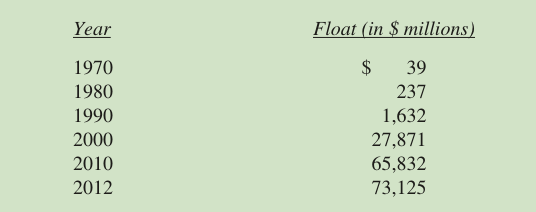
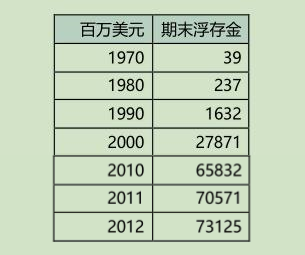
Meanwhile, we get to invest this float for Berkshire’s benefit. Though individual policies and claims come and go, the amount of float we hold remains quite stable in relation to premium volume. Consequently, as our business grows, so does our float. And how we have grown, as the following table shows:

同时,我们可以使用这些浮存金为伯克希尔投资。虽然单笔的保单和索赔有进有出,但是我们持有的浮存金规模相对于保费收入能维持一个稳定比率。所以,随着我们的业务扩张,我们的浮存金规模也在增长。我们增长的速度,如下表格所示:

Last year I told you that our float was likely to level off or even decline a bit in the future. Our insurance CEOs set out to prove me wrong and did, increasing float last year by $2.5 billion. I now expect a further increase in 2013. But further gains will be tough to achieve. On the plus side, GEICO’s float will almost certainly grow. In National Indemnity’s reinsurance division, however, we have a number of run-off contracts whose float drifts downward. If we do experience a decline in float at some future time, it will be very gradual – at the outside no more than 2% in any year.

去年我告诉大家,我们的浮存金规模在未来可能趋于平稳,甚至有可能会有所下降。但我们的保险公司 CEO们最终证明我是错的,他们去年让我们增加了 25 亿浮存金。我现在预期 2013 年还会进一步增长。但是更多的增长会越发困难。好消息是,GEICO 的浮存金基本上会保持增长。但是在国民保险公司的再保险部门,我们有一些流失的保单,它们的浮存金会下降。如果我们未来确实出现了浮存金的下降,那它会是非常温和的,每年流失出去的不会超过 2%。

If our premiums exceed the total of our expenses and eventual losses, we register an underwriting profit that adds to the investment income our float produces. When such a profit is earned, we enjoy the use of free money – and, better yet, get paid for holding it. That’s like your taking out a loan and having the bank pay you interest.

如果我们的保费收入超过了经营成本和赔付支出,我们会在利用浮存金投资获得的投资收益之外录得一个承保盈利。赚到这种利润的时候,我们将享受使用这些免费资金的好处,更好的是,我们还因为持有这些资金而赚到钱。这就好像你去银行贷款,银行还倒贴给你利息。

Unfortunately, the wish of all insurers to achieve this happy result creates intense competition, so vigorous in most years that it causes the P/C industry as a whole to operate at a significant underwriting loss. This loss, in effect, is what the industry pays to hold its float. For example, State Farm, by far the country’s largest insurer and a well-managed company besides, incurred an underwriting loss in eight of the eleven years ending in 2011. (Their financials for 2012 are not yet available.) There are a lot of ways to lose money in insurance, and the industry never ceases searching for new ones.

不幸的是,保险公司实现这个美好结果的强烈愿望导致了激烈的竞争,大多数年份竞争都是如此激烈,以至于整个财险行业都在严重承保亏损中运营。这些亏损,实质上就是整个行业为了获得浮存金所支付的代价。举个例子,州立农业保险公司(State Farm),当前美国最大且管理良好的保险公司,截止到 2011 年前的 11 年里有 8年都录得承保亏损(2012 年尚未公布)。保险行业有很多种亏钱的方式,而且该行业从未停止寻找新的亏钱方式。

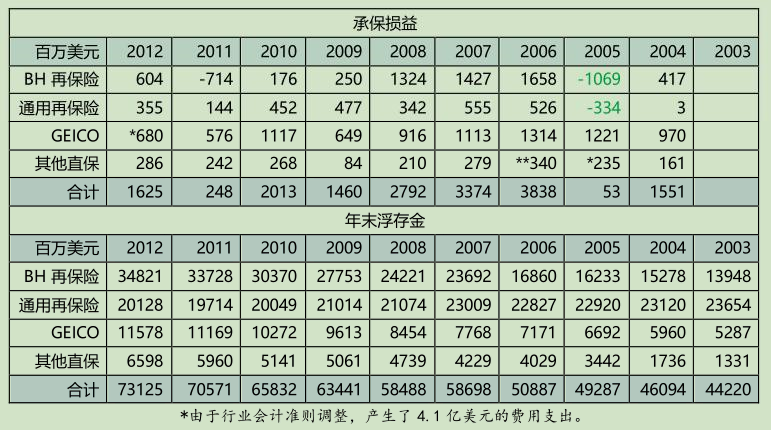
As noted in the first section of this report, we have now operated at an underwriting profit for ten consecutive years, our pre-tax gain for the period having totaled $18.6 billion. Looking ahead, I believe we will continue to underwrite profitably in most years. If we do, our float will be better than free money.

正如报告前一部分所述,我们已经连续 10 年录得承保盈利,在此期间我们的税前收益累计 186 亿美元。预计未来大部分年份中,我们依然会保持承保盈利。如果确实如此,那我们的浮存金就比免费的资金更诱人。

So how does our attractive float affect the calculations of intrinsic value? When Berkshire’s book value is calculated, the full amount of our float is deducted as a liability, just as if we had to pay it out tomorrow and were unable to replenish it. But that’s an incorrect way to look at float, which should instead be viewed as a revolving fund. If float is both costless and long-enduring, which I believe Berkshire’s will be, the true value of this liability is dramatically less than the accounting liability.

那我们诱人的浮存金将会如何影响内在价值的计算?当伯克希尔在计算账面价值的时候,所有的浮存金都作为负债被扣除了,就好像我们明天就必须赔付,并且再也无法补充回来一样。但这是一种错误看待浮存金的方式,它实际上应该被看做一笔循环基金。如果浮存金是无成本并且是长期存在的,我相信伯克希尔的浮存金确实如此,那这种债务的真实价值将远低于会计账面上的负债。

A partial offset to this overstated liability is $15.5 billion of “goodwill” that is attributable to our insurance companies and included in book value as an asset. In effect, this goodwill represents the price we paid for the float- generating capabilities of our insurance operations. The cost of the goodwill, however, has no bearing on its true value. For example, if an insurance business sustains large and prolonged underwriting losses, any goodwill asset carried on the books should be deemed valueless, whatever its original cost.

我们账面价值中包括的 155 亿"商誉",部分地抵消了这笔被夸大的负债。实际上,这些商誉代表着我们为保险公司产生浮存金的能力所支付的价格。然而商誉的账面成本,和它的真实价值毫无对应关系。比如说一家产生持续大额承保亏损的保险公司,其商誉应该为零,无论其历史成本是多少。

Fortunately, that’s not the case at Berkshire. Charlie and I believe the true economic value of our insurance goodwill – what we would happily pay to purchase an insurance operation producing float of similar quality – to be far in excess of its historic carrying value. The value of our float is one reason – a huge reason – why we believe Berkshire’s intrinsic business value substantially exceeds its book value.

幸运的是,伯克希尔的情况并非如此。查理和我相信,我们保险公司的商誉的真正经济价值,也就是我们愿意为购买一家能产生类似质量的浮存金的保险公司所支付的价格,远远超过账面上记录的历史成本。浮存金的价值是我们认为伯克希尔的内在价值明显超过账面价值的一个原因,一个重要原因。

Let me emphasize once again that cost-free float is not an outcome to be expected for the P/C industry as a whole: There is very little “Berkshire-quality” float existing in the insurance world. In 37 of the 45 years ending in 2011, the industry’s premiums have been inadequate to cover claims plus expenses. Consequently, the industry’s overall return on tangible equity has for many decades fallen far short of the average return realized by American industry, a sorry performance almost certain to continue.

必须再强调一下,无成本的浮存金不应该成为对整个产险行业平均预期的结果:在保险行业里,像伯克希尔这样能获得的优质浮存金的公司非常之少。截至 2011 年的 45 年中,有 37 年整个行业的保费收入不能覆盖赔付支出和成本费用。因此,几十年来整个行业的有形资产回报率,一直远远低于美国其他行业的平均水平,这种糟糕的表现几乎肯定将会持续下去。

A further unpleasant reality adds to the industry’s dim prospects: Insurance earnings are now benefitting from “legacy” bond portfolios that deliver much higher yields than will be available when funds are reinvested during the next few years – and perhaps for many years beyond that. Today’s bond portfolios are, in effect, wasting assets. Earnings of insurers will be hurt in a significant way as bonds mature and are rolled over.

另外一个更加不利的事实让行业的前景更加暗淡:保险公司的收益现在受益于之前"遗留"的高息债券组合,这些投资组合的收益率,远高于未来几年(或许持续很多年)资金再投资的回报率。今天的债券投资组合实际上是在浪费资金。随着债券到期并再投资(收益率下行),保险收益将会遭受重创。

* * * * * * * * * * * *

* * * * * * * * * * * *

Berkshire’s outstanding economics exist only because we have some terrific managers running some extraordinary insurance operations. Let me tell you about the major units.

伯克希尔优越的经济特性之所以存在,是因为我们有一些出色的经理人在运营着我们非凡的保险业务。让我将给大家介绍一些主要的公司。

First by float size is the Berkshire Hathaway Reinsurance Group, run by Ajit Jain. Ajit insures risks that no one else has the desire or the capital to take on. His operation combines capacity, speed, decisiveness and, most important, brains in a manner unique in the insurance business. Yet he never exposes Berkshire to risks that are inappropriate in relation to our resources. Indeed, we are far more conservative in avoiding risk than most large insurers. For example, if the insurance industry should experience a $250 billion loss from some mega-catastrophe – a loss about triple anything it has ever experienced – Berkshire as a whole would likely record a significant profit for the year because it has so many streams of earnings. All other major insurers and reinsurers would meanwhile be far in the red, with some facing insolvency.

首先,浮存金规模排在第一的是伯克希尔再保险集团,由阿吉特·贾恩(Ajit Jain)运营。阿吉特对其他人都不愿意或者没有财力承保的风险进行承保。他的业务结合了能力、速度、果断,以及最重要的他的头脑智慧。他从未让伯克希尔暴露于与我们的资源不相称的风险之下。实际上,我们比多数大保险公司在规避风险方面都更加保守。举例来说,如果保险行业因某项巨灾遭遇了 2500 亿美元的亏损(这是历史上所发生过最大规模亏损的 3 倍),伯克希尔整体上当年依然能够实现盈利,因为它有如此多的收益来源。其他的直保保险公司和再保险公司则会出现大额的亏损,有些甚至将面临破产。

From a standing start in 1985, Ajit has created an insurance business with float of $35 billion and a significant cumulative underwriting profit, a feat that no other insurance CEO has come close to matching. He has thus added a great many billions of dollars to the value of Berkshire. If you meet Ajit at the annual meeting, bow deeply.

从 1985 年开始,阿吉特已经创建了一家拥有 350 亿美元浮存金和可观承保盈利的再保险公司,这是一项任何其他保险公司的 CEO 都难以望其项背的成就。他也为伯克希尔贡献了数十亿美元的价值。如果你在年会上遇到阿吉特,请深深鞠躬表示敬意。

* * * * * * * * * * * *

* * * * * * * * * * * *

We have another reinsurance powerhouse in General Re, managed by Tad Montross.

我们另一家再保险公司是通用再保险,由泰德·蒙特罗斯(Tad Montross)管理。

At bottom, a sound insurance operation needs to adhere to four disciplines. It must (1) understand all exposures that might cause a policy to incur losses; (2) conservatively assess the likelihood of any exposure actually causing a loss and the probable cost if it does; (3) set a premium that, on average, will deliver a profit after both prospective loss costs and operating expenses are covered; and (4) be willing to walk away if the appropriate premium can’t be obtained.

归根结底,一家优秀的保险公司必须遵守四个承保原则。它必须:(1)理解所有可能导致保单形成损失的风险敞口;(2)保守地衡量风险敞口实际形成损失的概率以及可能的损失规模;(3)设定合理的保费,平均来看,在覆盖潜在的赔付损失和运营成本后,能够实现承保盈利;(4)如果无法获得适当的保费,愿意放弃保单。

Many insurers pass the first three tests and flunk the fourth. They simply can’t turn their back on business that is being eagerly written by their competitors. That old line, “The other guy is doing it, so we must as well,” spells trouble in any business, but none more so than insurance.

很多保险公司顺利通过前三条测试,但在第四条上不及格。他们无法放弃竞争对手正在争抢的业务。老话讲,"别人这么干,我也得这么干",这在很多行业都带来了麻烦,但保险行业尤甚。

Tad has observed all four of the insurance commandments, and it shows in his results. General Re’s huge float has been better than cost-free under his leadership, and we expect that, on average, it will continue to be. We are particularly enthusiastic about General Re’s international life reinsurance business, which has achieved consistent and profitable growth since we acquired the company in 1998.

Tad 遵守了所有四条保险戒律,他的业绩证明了这一点。在他的领导下,通用再保险的巨额浮存金比无成本的资金还要诱人,并且我们预计这种情况依然会继续。我们尤其对通用再保险的国际人寿再保险业务充满热情,从 1998 年我们收购公司以来,这项业务持续增长并不断盈利。

* * * * * * * * * * * *

* * * * * * * * * * * *

Finally, there is GEICO, the insurer on which I cut my teeth 62 years ago. GEICO is run by Tony Nicely, who joined the company at 18 and completed 51 years of service in 2012.

最后还有 GEICO,62 年前我就是从这家保险公司成长起来的。GEICO 由托尼·莱斯利运营,他 18 岁就加入了公司,到 2012 年已经服役 51 年。

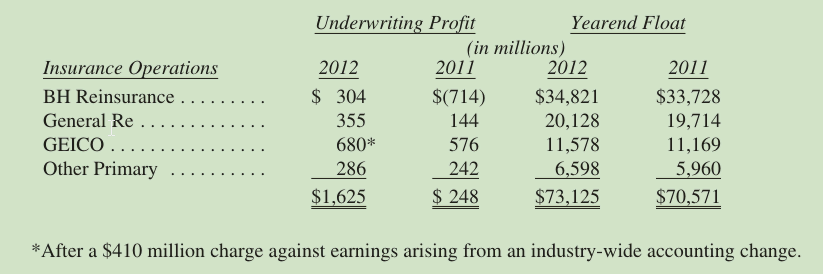
I rub my eyes when I look at what Tony has accomplished. Last year, it should be noted, his record was considerably better than is indicated by GEICO’s GAAP underwriting profit of $680 million. Because of a change in accounting rules at the beginning of the year, we recorded a charge to GEICO’s underwriting earnings of $410 million. This item had nothing to do with 2012’s operating results, changing neither cash, revenues, expenses nor taxes. In effect, the writedown simply widened the already huge difference between GEICO’s intrinsic value and the value at which we carry it on our books.

看到托尼的成就让我无法相信自己的眼睛。必须说明的是,他的业绩远不是去年 GEICO 按 GAAP 报告的 6.8亿美元承保盈利所能说明的。因为年初的会计准则调整,我们在 GEICO 的承保盈利中计入了 4.1 亿的费用。这和GEICO 2012 年的运营没有任何关系,不改变现金、收入、成本和税收科目。实际上,这项减记只是进一步加大了 GEICO 的内在价值和账面价值之间的差距。

GEICO earned its underwriting profit, moreover, despite the company suffering its largest single loss in history. The cause was Hurricane Sandy, which cost GEICO more than three times the loss it sustained from Katrina, the previous record-holder. We insured 46,906 vehicles that were destroyed or damaged in the storm, a staggering number reflecting GEICO’s leading market share in the New York metropolitan area.

尽管公司遭遇了历史上最大的单笔损失,GEICO 依然实现了承保盈利。亏损的原因是飓风 Sandy,它给GEICO 造成了三倍于此前的记录保持者飓风 Katrina 的损失。风暴中损毁的车辆中 46906 辆是由 GEICO 承保的,这个巨大的数字,这也反映了 GEICO 在纽约地区市场份额的领先地位。

Last year GEICO enjoyed a meaningful increase in both the renewal rate for existing policyholders (“persistency”) and in the percentage of rate quotations that resulted in sales (“closures”). Big dollars ride on those two factors: A sustained gain in persistency of a bare one percentage point increases intrinsic value by more than $1 billion. GEICO’s gains in 2012 offer dramatic proof that when people check the company’s prices, they usually find they can save important sums. (Give us a try at 1-800-847-7536 or GEICO.com. Be sure to mention that you are a shareholder; that fact will usually result in a discount.) * * * * * * * * * * * * In addition to our three major insurance operations, we own a group of smaller companies, most of them plying their trade in odd corners of the insurance world. In aggregate, these companies have consistently delivered an underwriting profit. Moreover, as the table below shows, they also provide us with substantial float. Charlie and I treasure these companies and their managers.

去年,GEICO 在现有投保客户的续保率("客户粘度")和询单转化率("转化率")上都有显著的提升。这两项数据意味着一大笔利润:仅一个百分点的持续增长,就意味着内在价值增加超过 10 亿美元。2012 年 GEICO 的收益提供了戏剧性的证明,只要来询问 GEICO 保单价格,通常会发现可以省下不少钱。(打个电话到 1-800-847-7536或者到网站 GEICO.com 试一下。记得申明你是伯克希尔的股东,这通常能让给你享受优惠价。)除了我们的三大保险公司外,我们还有一些规模较小的保险公司,它们的大部分专注于保险行业的一些细分领域。整体上,这些公司一直为我们贡献承保收益。另外,正如表格数据显示的那样,它们也提供了大量浮存金。查理和我非常珍视这些公司和它们的经理人。

Late in 2012, we enlarged this group by acquiring Guard Insurance, a Wilkes-Barre company that writes workers compensation insurance, primarily for smaller businesses. Guard’s annual premiums total about $300 million. The company has excellent prospects for growth in both its traditional business and new lines it has begun to offer.

2012 下半年,我们通过收购 Guard Insurance 扩大了这个大家庭。它是一家位于 Wilkes-Barre 的工伤保险公司,主要做一些小额的保单。Guard 的年保费规模大约 3 亿美元。这家公司在它的传统业务和它即将提供的新业务上都有很好的增长潜力。
Among large insurance operations, Berkshire’s impresses me as the best in the world. It was our lucky day when, in March 1967, Jack Ringwalt sold us his two property-casualty insurers for $8.6 million.

在所有大型保险公司中,我认为伯克希尔是世界上最好的。我们非常有幸在 1967 年 3 月以 860 万美元收购了 Jack Ringwalt 的两家财产保险公司。

〔译文源于芒格书院整理的巴菲特致股东的信〕

© Copyright 2023 Meitiandudian. All Rights Reserved.