巴菲特致股东的信(2015年)①概述


To the Shareholders of Berkshire Hathaway Inc.:

致伯克希尔·哈撒韦公司所有股东:

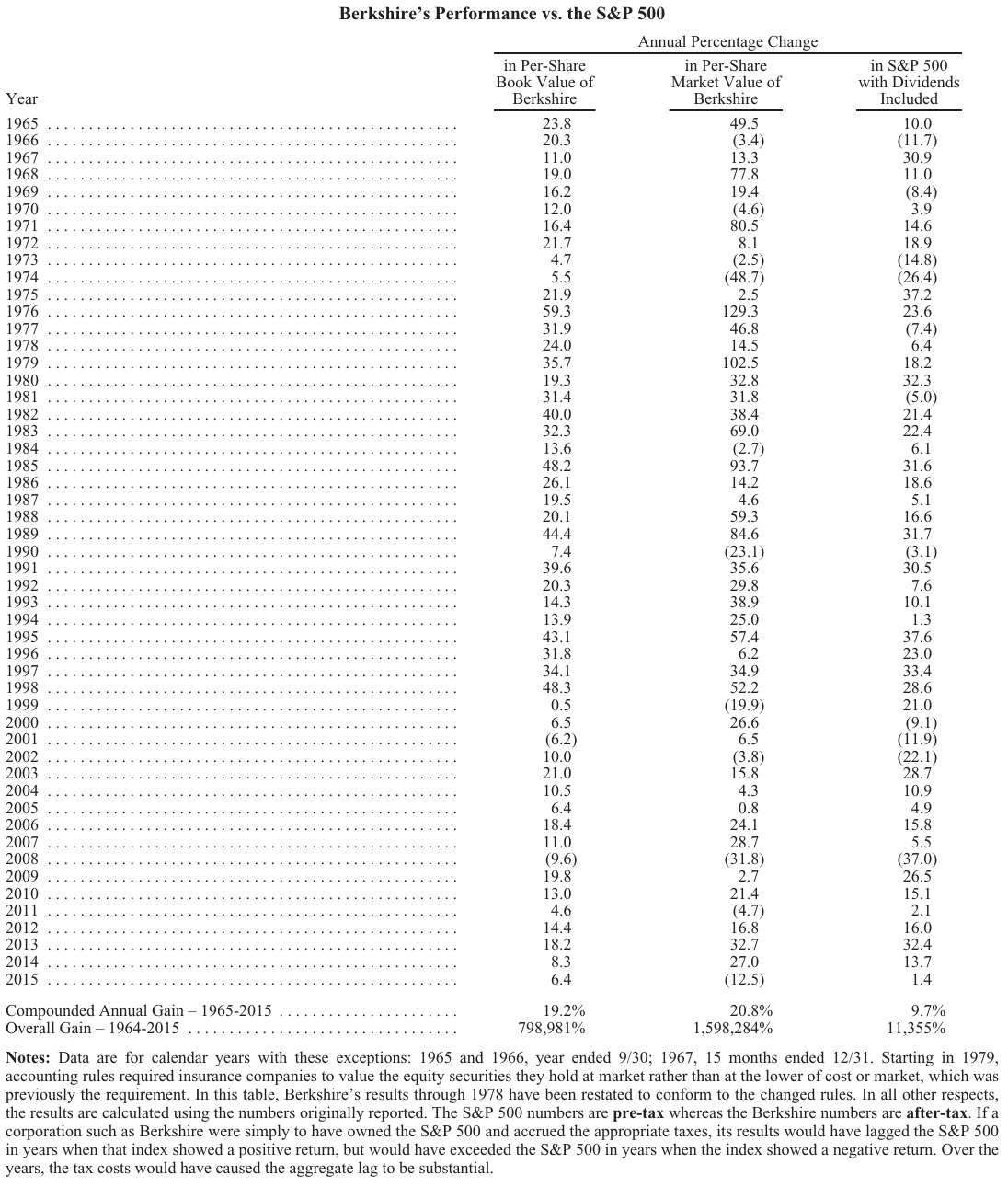
Berkshire’s gain in net worth during 2015 was $15.4 billion, which increased the per-share book value of both our Class A and Class B stock by 6.4%. Over the last 51 years (that is, since present management took over), per-share book value has grown from $19 to $155,501, a rate of 19.2% compounded annually.*

2015 年伯克希尔的账面价值增长了154 亿美元,A/B 股每股账面价值增长6.4%(标普1.4%)。自现任管理层接手的51 年来,每股账面价值已从19 美元增至155501 美元,年均复合增长率约为19.2%。

* All per-share figures used in this report apply to Berkshire’s A shares. Figures for the B shares are 1/1500th of those shown for A.

本报告使用的所有每股数据均适用于伯克希尔的A股。B股数据为A股所示数据的1/1500。

During the first half of those years, Berkshire’s net worth was roughly equal to the number that really counts: the intrinsic value of the business. The similarity of the two figures existed then because most of our resources were deployed in marketable securities that were regularly revalued to their quoted prices (less the tax that would be incurred if they were to be sold). In Wall Street parlance, our balance sheet was then in very large part “marked to market.”

前半个时期,伯克希尔的账面价值与真正重要的企业内在商业价值大致相等。这两个数字之所以近似是因为我们的大多数资产配置在有价证券上,这些证券定期定期按市场报价进行重估(减去出售时将产生的税收)。按照华尔街的说法,我们的大部分资产是"按市值计价的"。

By the early 1990s, however, our focus had changed to the outright ownership of businesses, a shift that diminished the relevance of balance-sheet figures. That disconnect occurred because the accounting rules that apply to controlled companies are materially different from those used in valuing marketable securities. The carrying value of the “losers” we own is written down, but “winners” are never revalued upwards.

然而,到了1990 年代初,我们的资本配置重点已经转向企业的完全所有权,这一转变减少了资产负债表数据的相关性。因为适用于控股公司的会计准则不同于评估公司有价证券,我们拥有的一些衰败企业的账面价值通常被减记,而那些优秀企业的账面价值却未曾重估。

We’ve had experience with both outcomes: I’ve made some dumb purchases, and the amount I paid for the economic goodwill of those companies was later written off, a move that reduced Berkshire’s book value. We’ve also had some winners – a few of them very big – but have not written those up by a penny.

我们对这两种企业都有经历:我做了一些愚蠢的投资,但我为那些衰败企业的经济信誉支付的金额后来被注销,此举降低了伯克希尔的账面价值。同时,我们也有一些成功的投资,其中一些是非常成功的,但却没能提高企业的账面价值。

Over time, this asymmetrical accounting treatment (with which we agree) necessarily widens the gap between intrinsic value and book value. Today, the large – and growing – unrecorded gains at our “winners” make it clear that Berkshire’s intrinsic value far exceeds its book value. That’s why we would be delighted to repurchase our shares should they sell as low as 120% of book value. At that level, purchases would instantly and meaningfully increase per-share intrinsic value for Berkshire’s continuing shareholders.

随着时间的推移,相较于我们认可的处理方式,这种不对称的会计处理必然扩大了公司内在价值与账面价值之间的差距。现在,我们优秀企业不断增长但却未记录的经济商誉,清楚的表明伯克希公司的内在价值远远超过其账面价值,这就是为什么我们乐意将股票回购的价格上限提高到账面价值的120%。

The unrecorded increase in the value of our owned businesses explains why Berkshire’s aggregate market- value gain – tabulated on the facing page – materially exceeds our book-value gain. The two indicators vary erratically over short periods. Last year, for example, book-value performance was superior. Over time, however, market-value gains should continue their historical tendency to exceed gains in book value.

在这个水平线上,回购对于伯克希尔剩余的股东而言,会快速提高每股的内在价值。我们拥有企业的内在价值未曾记录的增加,解释了为什么首页上伯克希尔的市场价值变动收益,超出了我们账面价值变动收益。

〔译文源于芒格书院整理的巴菲特致股东的信〕

© Copyright 2023 Meitiandudian. All Rights Reserved.