巴菲特致股东的信(2015年)④保险业务


Insurance

保险业务

Let’s look first at insurance. The property-casualty (“P/C”) branch of that industry has been the engine that has propelled our expansion since 1967, when we acquired National Indemnity and its sister company, National Fire & Marine, for $8.6 million. Today, National Indemnity is the largest property-casualty company in the world, as measured by net worth. Moreover, its intrinsic value is far in excess of the value at which it is carried on our books.

我们先来看看保险业务,自从我们在1967 年以860 万美元的价格,收购了国民保险和它的姊妹公司国民火灾与海事保险公司以来,这个行业的财产意外险(P/C)业务一直是推动我们扩张的引擎。今天,从净资产衡量,国民保险是世界上最大的财产意外险公司。不仅如此,它的内在价值远超我们的账面价值。

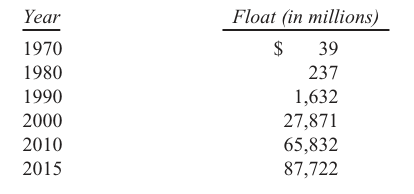
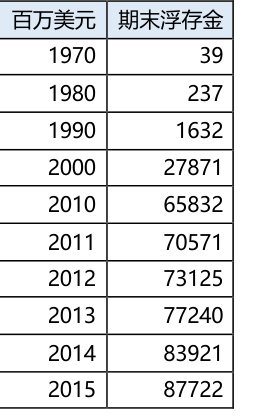
One reason we were attracted to the P/C business was its financial characteristics: P/C insurers receive premiums upfront and pay claims later. In extreme cases, such as those arising from certain workers’ compensation accidents, payments can stretch over many decades. This collect-now, pay-later model leaves P/C companies holding large sums – money we call “float” – that will eventually go to others. Meanwhile, insurers get to invest this float for their own benefit. Though individual policies and claims come and go, the amount of float an insurer holds usually remains fairly stable in relation to premium volume. Consequently, as our business grows, so does our float. And how we have grown, as the following table shows:

我们被财产意外险业务吸引的一个原因是它独特的经济特征:保险公司提前收取保费,然后支付索赔金。在极端的例子中,比如某些工伤赔偿金,支付期限甚至可以长达数十年。这种"先收后付"的模式让产险公司拥有大量现金,我们称之为浮存金,这些资金最终都会支付给投保人手中。但同时,保险公司可以用这些浮存金来为自己谋利益。虽然单笔的保单和索赔有进有出,但保险公司持有的浮存金规模和保费收入维持一个相对稳定的关系。所以,随着我们业务扩张,我们的浮存金规模也在增长。浮存金是如何增长的如下表所示:

Further gains in float will be tough to achieve. On the plus side, GEICO and several of our specialized operations are almost certain to grow at a good clip. National Indemnity’s reinsurance division, however, is party to a number of run-off contracts whose float drifts downward. If we do in time experience a decline in float, it will be very gradual – at the outside no more than 3% in any year. The nature of our insurance contracts is such that we can never be subject to immediate or near-term demands for sums that are of significance to our cash resources. This structure is by design and is a key component in the strength of Berkshire’s economic fortress. It will never be compromised.

浮存金进一步的增长将难以实现。从好的方面来看,GEICO 和我们专业保险业务几乎肯定都会保持良好的速度增长。国民保险再保险业务是一些浮存金快速下滑的非流动合同的缔约方。但即便我们的浮存金下滑,其速率也会十分平缓,每年整体下滑不会超3%。保险业务的特性决定了,我们拥有的现金资源肯定可以满足任何即时或短期的偿付需求。这个结构是经过特殊设计的,是伯克希尔经济堡垒的关键组成部分。它永远不会被放弃。

If our premiums exceed the total of our expenses and eventual losses, we register an underwriting profit that adds to the investment income our float produces. When such a profit is earned, we enjoy the use of free money – and, better yet, get paid for holding it.

如果我们的保费收入超过了我们运营费用和最终损失的总和,那么我们将会实现承保盈利,而这些将会增加我们的浮存金产生的投资收益。当获得这样的利润,我们就可以享受免费使用资金,而且更好的是,我们因为持有这笔资金还获得了额外的收益。

Unfortunately, the wish of all insurers to achieve this happy result creates intense competition, so vigorous indeed that it sometimes causes the P/C industry as a whole to operate at a significant underwriting loss. This loss, in effect, is what the industry pays to hold its float. Competitive dynamics almost guarantee that the insurance industry, despite the float income all its companies enjoy, will continue its dismal record of earning subnormal returns on tangible net worth as compared to other American businesses. The prolonged period of low interest rates the world is now dealing with also virtually guarantees that earnings on float will steadily decrease for many years to come, thereby exacerbating the profit problems of insurers. It’s a good bet that industry results over the next ten years will fall short of those recorded in the past decade, particularly for those companies that specialize in reinsurance.

不幸的是,所有保险公司都希望实现这一令人满意的结果。这导致了激烈竞争。激烈的竞争常常让整个财产保险行业遭受巨额承保损失。这个损失实际上就是保险行业为持有浮存金而支付的成本。尽管保险公司享受着浮存金带来的好处,但和美国其他行业的公司相比,竞争动态几乎会确保保险公司,将保持净有形资产回报率低于正常水平的惨淡记录。目前美国面临的长期低利率实际上也保证了浮存金未来获得的投资收益将减少,从而加剧了保险行业的利润下滑问题。保险行业未来十年的经营业绩,很有可能低于过去十年的记录,尤其对于那些专门从事再保险业务的公司来说。

As noted early in this report, Berkshire has now operated at an underwriting profit for 13 consecutive years, our pre-tax gain for the period having totaled $26.2 billion. That’s no accident: Disciplined risk evaluation is the daily focus of all of our insurance managers, who know that while float is valuable, its benefits can be drowned by poor underwriting results. All insurers give that message lip service. At Berkshire it is a religion, Old Testament style.

正如报告此前提及的一样,伯克希尔现在已连续13 年实现承保盈利。这一期间我们税前收益合计262 亿美元。并非偶然,严格的风险评估是我们所有保险经理们的日常关注焦点,他们知道虽然浮存金是有价值的,但其好处可能被糟糕承保结果淹没。虽然所有的保险公司都会在口头上传达这点观点,但在伯克希尔这是一种信仰。

So how does our float affect intrinsic value? When Berkshire’s book value is calculated, the full amount of our float is deducted as a liability, just as if we had to pay it out tomorrow and could not replenish it. But to think of float as strictly a liability is incorrect. It should instead be viewed as a revolving fund. Daily, we pay old claims and related expenses – a huge $24.5 billion to more than six million claimants in 2015 – and that reduces float. Just as surely, we each day write new business that will soon generate its own claims, adding to float.

那么浮存金将如何影响我们的内在价值?当我们计算伯克希尔账面价值时,浮存金的总额被作为负债减掉,就好像我们明天就要将其全部支付而无法补充一样。但将浮存金严格视作负债是错误的。它应该被视为一个循环基金。我们每天都要支付过去的索赔和相关费用,2015 年就向600 万索赔人支付了245 亿美元的巨额费用,这减少了我们的浮存金。但同样肯定的是,我们每天都在承保新的业务,收取的保费又增加了浮存金。

If our revolving float is both costless and long-enduring, which I believe it will be, the true value of this liability is dramatically less than the accounting liability. Owing $1 that in effect will never leave the premises – because new business is almost certain to deliver a substitute – is worlds different from owing $1 that will go out the door tomorrow and not be replaced. The two types of liabilities, however, are treated as equals under GAAP.

如果我们的循环浮存金没有成本且可以长期保持规模(我相信会是这样),那么这种负债的真正价值会显著低于会计上的账面负债。因为新的业务会替代旧的索赔,因此欠下的每1 美元永远都不会从公司消失,这跟持有明天就将付出而无法收回的1 美元截然不同。然而根据GAAP 准则这两种类型的负债被认为是完全相同的。

A partial offset to this overstated liability is a $15.5 billion “goodwill” asset that we incurred in buying our insurance companies and that increases book value. In very large part, this goodwill represents the price we paid for the float-generating capabilities of our insurance operations. The cost of the goodwill, however, has no bearing on its true value. For example, if an insurance company sustains large and prolonged underwriting losses, any goodwill asset carried on the books should be deemed valueless, whatever its original cost.

我们在收购保险公司时产生了155 亿美元的"商誉"资产,这增加了账面价值,并部分抵消了这一被夸大的浮存金负债。很大程度上这种商誉体现了我们为保险业务获得浮存金能力所支付的价格。然而,商誉的收购成本与真实价值无关。举例来说,如果一家保险公司蒙受了长期大额的承保损失,那么无论其原始取得成本如何,账面上的任何商誉资产都应被视作是毫无价值的。

Fortunately, that does not describe Berkshire. Charlie and I believe the true economic value of our insurance goodwill – what we would happily pay for float of similar quality were we to purchase an insurance operation possessing it – to be far in excess of its historic carrying value. Indeed, almost the entire $15.5 billion we carry for goodwill in our insurance business was already on our books in 2000. Yet we subsequently tripled our float. Its value today is one reason – a huge reason – why we believe Berkshire’s intrinsic business value substantially exceeds its book value.

幸运的是,伯克希尔并不是这样。查理和我相信,我们保险公司商誉真正的经济价值远超其历史账面价值。如果我们收购拥有类似商誉的保险公司,我们很乐意为类似质量的浮存金支付费用。事实上,2000 年我们在保险业务中为商誉支付的155 亿美元几乎全部计入账面价值,然而,我们之后保险业务的浮存金规模扩大了三倍,它的价值就是我们认为伯克希尔内在商业价值远高于其账面价值的一个巨大的原因。

* * * * * * * * * * * *

* * * * * * * * * * * *

Berkshire’s attractive insurance economics exist only because we have some terrific managers running disciplined operations that possess hard-to-replicate business models. Let me tell you about the major units.

伯克希尔颇具吸引力的保险经济模式之所以存在,都是因为我们拥有一批杰出的经理人。他们经营着纪律严明的承保业务,拥有难以复制的商业模式。让我来向你们介绍几个主要业务的运营情况。

First by float size is the Berkshire Hathaway Reinsurance Group, managed by Ajit Jain. Ajit insures risks that no one else has the desire or the capital to take on. His operation combines capacity, speed, decisiveness and, most important, brains in a manner unique in the insurance business. Yet he never exposes Berkshire to risks that are inappropriate in relation to our resources.

首先,浮存金规模最高的是由阿吉特·贾因管理的伯克希尔再保险集团。阿吉特对别人不敢兴趣或没有资本承保的风险提供保险。他的运营结合了能力、速度和果断。更重要的是,他的思维方式在保险界独一无二。然而,他从来没有将伯克希尔暴露在与我们资源不相称的风险之中。

Indeed, Berkshire is far more conservative in avoiding risk than most large insurers. For example, if the insurance industry should experience a $250 billion loss from some mega-catastrophe – a loss about triple anything it has ever experienced – Berkshire as a whole would likely record a significant profit for the year because of its many streams of earnings. We would also remain awash in cash and be looking for large opportunities to write business in an insurance market that might well be in disarray. Meanwhile, other major insurers and reinsurers would be swimming in red ink, if not facing insolvency.

事实上,伯克希尔在规避风险方面远比其他大多数大型保险公司要保守。举例来说,如果保险业因某种特大灾难而遭受2500 亿美元的损失,这一损失大约为保险行业经历过最大损失的3 倍,伯克希尔作为一个整体,由于其众多的收益来源,依然将实现可观的利润。我们也将保持现金充沛,并将在一个已经陷入动荡的保险市场中寻找大量的承保机会。而其他的主要保险或再保险公司即使不面临破产,也会出现严重亏损。

When Ajit entered Berkshire’s office on a Saturday in 1986, he did not have a day’s experience in the insurance business. Nevertheless, Mike Goldberg, then our manager of insurance, handed him the keys to our reinsurance business. With that move, Mike achieved sainthood: Since then, Ajit has created tens of billions of value for Berkshire shareholders.

1986 年的那个周六,阿吉特走进了伯克希尔的办公室,那时的他甚至没有一点保险业方面的经验。尽管如此,时任我们保险公司的经理人MikeGoldberg 还是让他管理再保险业务。在这种鼓励和推动下,阿吉特在保险界崭露头角,并且很快大放异彩,为伯克希尔的股东创造了数百亿美元的价值。

* * * * * * * * * * * *

* * * * * * * * * * * *

We have another reinsurance powerhouse in General Re, managed by Tad Montross.

我们另一个再保险业务巨头是由TadMontross 管理通用再保险公司。

At bottom, a sound insurance operation needs to adhere to four disciplines. It must (1) understand all exposures that might cause a policy to incur losses; (2) conservatively assess the likelihood of any exposure actually causing a loss and the probable cost if it does; (3) set a premium that, on average, will deliver a profit after both prospective loss costs and operating expenses are covered; and (4) be willing to walk away if the appropriate premium can’t be obtained.

本质上,一个稳健的保险公司需要遵守四大承保纪律,它必须:(1)理解所有可能导致保单发生损失的风险;(2)谨慎的评估风险发生的可能性及其可能造成的损失;(3)设定合理的保费。平均而言,保费在满足可能发生的损失及运营费用的总和后,将带来利润;(4)如果在无法获得合适保费的情况下愿意放手。

Many insurers pass the first three tests and flunk the fourth. They simply can’t turn their back on business that is being eagerly written by their competitors. That old line, “The other guy is doing it, so we must as well,” spells trouble in any business, but in none more so than insurance.

许多保险公司都能遵守前三条规则,却忽视了第四条。他们根本无法放弃竞争对手正在积极争取的业务。老话说:"别人都这么做,我们也必须这么做",这在许多行业都会招致麻烦,但保险行业尤为突出。

Tad has observed all four of the insurance commandments, and it shows in his results. General Re’s huge float has been considerably better than cost-free under his leadership, and we expect that, on average, to continue. We are particularly enthusiastic about General Re’s international life reinsurance business, which has grown consistently and profitably since we acquired the company in 1998.

Tad 遵守了这四条戒律,而这体现在了他的业绩表现上。在他管理下,通用再保险的巨额浮存金表现一直好于零成本,我们预计这种情况仍将保持。我们对通用再保险的国际人寿再保险业务尤其满意。自我们1998 年收购该公司以来,该业务就一直稳定增长且保持盈利。

It can be remembered that soon after we purchased General Re, it was beset by problems that caused commentators – and me as well, briefly – to believe I had made a huge mistake. That day is long gone. General Re is now a gem.

我们记得在我们购买通用再保险后不久,它就被各种问题所困扰。这让不少评论员(包括我)一度认为我犯了一个巨大的错误。这一天早已过去。通用再保险现在是块宝石。

* * * * * * * * * * * *

* * * * * * * * * * * *

Finally, there is GEICO, the insurer on which I cut my teeth 65 years ago. GEICO is managed by Tony Nicely, who joined the company at 18 and completed 54 years of service in 2015. Tony became CEO in 1993, and since then the company has been flying. There is no better manager than Tony. In the 40 years that I’ve known him, his every action has made great sense.

最后还有GEICO 保险,65 年前,我就是在这家保险公司学到了保险业务的第一课。GEICO 由Tony Nicely运营管理,他18 岁就加入公司,到2015 年已为公司服务54 年。Tony 在1993 年成为公司CEO,之后公司一直表现亮眼。没有比Tony 更好的经理了。在我认识他的40 年里,他的每一项管理措施都很到位。

When I was first introduced to GEICO in January 1951, I was blown away by the huge cost advantage the company enjoyed compared to the expenses borne by the giants of the industry. It was clear to me that GEICO would succeed because it deserved to succeed.

1951 年1 月,我第一次听说GEICO 的时候,我被该公司相对于其他保险巨头巨大的成本优势震惊了。当时我就明白,GEICO 将获得成功,因为它理应成功。

No one likes to buy auto insurance. Almost everyone, though, likes to drive. The insurance consequently needed is a major expenditure for most families. Savings matter to them – and only a low-cost operation can deliver these. Indeed, at least 40% of the people reading this letter can save money by insuring with GEICO. So stop reading – right now! – and go to geico.com or call 800-368-2734.

没人喜欢买车险,但几乎所有人都爱开车。因为对大多数家庭来说购买车险是一笔重大支出,而节约对家庭来说很重要,所以只有低成本的保险公司才能提供这些。事实上,至少40%阅读这封信的人可通过在GEICO 投保省钱。所以暂停阅读,登录GEICO.Com 或拨打800-368-2734咨询一下看看。

GEICO’s cost advantage is the factor that has enabled the company to gobble up market share year after year. (We ended 2015 with 11.4% of the market compared to 2.5% in 1995, when Berkshire acquired control of GEICO.) The company’s low costs create a moat – an enduring one – that competitors are unable to cross.

GEICO 的成本优势是该公司能够年复一年持续扩大市场份额的主要原因,(1995 年伯克希尔刚收购GEICO 的时候,它的市场份额是2.5%,而2015 年我们的市场份额达到11.4%)。GEICO 的低成本创造了一条竞争对手无法逾越的护城河。

All the while, our gecko never tires of telling Americans how GEICO can save them important money. I love hearing the little guy deliver his message: “15 minutes could save you 15% or more on car insurance.” (Of course, there’s always a grouch in the crowd. One of my friends says he is glad that only a few animals can talk, since the ones that do speak seem unable to discuss any subject but insurance.)

一直以来,我们的吉祥物"Gecko"不知疲倦地告诉美国人GEICO 如何为他们省钱。我喜欢听这个小家伙所传达的信息:15 分钟可以为你节省15%或更多的汽车保费。当然,人群中总会有一些抱怨,我的一个朋友说,他很高兴只有少数动物会说话,因为这些会说话的动物,似乎除了保险之外不能讨论任何话题。

* * * * * * * * * * * *

* * * * * * * * * * * *

In addition to our three major insurance operations, we own a group of smaller companies that primarily write commercial coverages. In aggregate, these companies are a large, growing and valuable operation that consistently delivers an underwriting profit, usually much better than that reported by their competitors. Indeed, over the past 13 years, this group has earned $4 billion from underwriting – about 13% of its premium volume – while increasing its float from $943 million to $9.9 billion.

我们除了拥有的三大保险公司,我们还有其他一些规模较小的公司,它们主要承保商业保险。整体而言,这些公司是一个规模庞大、不断增长且价值不菲的业务。它们始终保持承保盈利,并且通常比同行报告的利润好得多。在过去13 年中,该集团从承保业务赚得了40 亿美元收益(约占其保费收入的13%),同时浮存金从9.43 亿美元增长到99 亿美元。

Less than three years ago, we formed Berkshire Hathaway Specialty Insurance (“BHSI”), which we include in this group. Our first decision was to put Peter Eastwood in charge. That move was a home run: BHSI has already developed $1 billion of annual premium volume and, under Peter’s direction, is destined to become one of the world’s leading P/C insurers.

不到三年前,我们成立了伯克希尔特种保险公司(BHSI),我们也将其纳入该集团。我们第一个决定就是让Peter Eastwood 去管理这个公司。这是一个全垒打的举措:伯克希尔特种保险公司的年度保费数量已经达到10亿美元,而且在Peter 的领导下,它有望成为世界领先的产险保险公司之一。

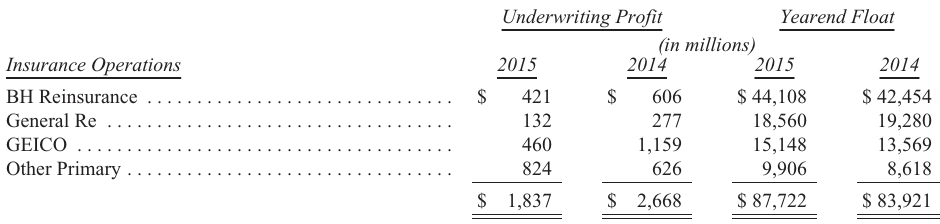
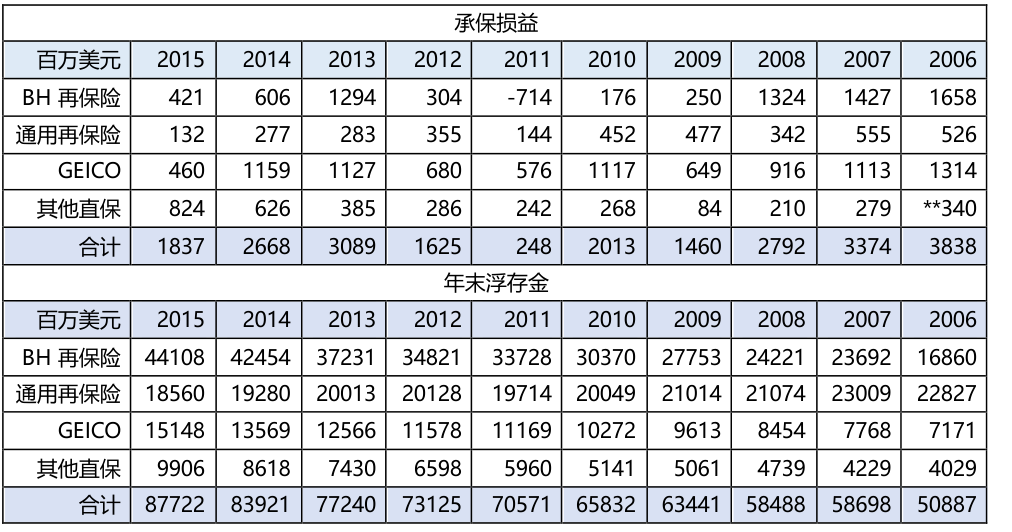
Here’s a recap of underwriting earnings and float by division:

以下按业务部门划分的承保业绩和浮存金规模摘要:

Berkshire’s great managers, premier financial strength and a variety of business models protected by wide moats amount to something unique in the insurance world. This assemblage of strengths is a huge asset for Berkshire shareholders that will only get more valuable with time.

伯克希尔优秀的经理人、出色的财务能力和各种受护城河保护的商业模式,在保险业中是独一无二的。这些优势组合是伯克希尔股东的巨大财富,长远来看会为股东们创造更大的价值。

〔译文源于芒格书院整理的巴菲特致股东的信〕

© Copyright 2023 Meitiandudian. All Rights Reserved.